
What Is Waterproof Backer Board and Where Is It Used?
Table of Contents
What Is Waterproof Backer Board?
A waterproof backer board is a construction panel designed to provide a stable substrate for tile and other wall finishes in areas exposed to water or high humidity.
Unlike conventional wall materials, waterproof backer boards are specifically designed for moisture-prone applications. They are commonly used behind ceramic tile, porcelain tile and stone in showers, bathrooms, wet rooms and other areas where moisture protection matters.
For contractors and builders, the main purpose is simple: provide a suitable surface for finishing while helping protect the wall assembly from moisture-related problems.
Why Is Waterproof Backer Board Used?
Tile can provide an attractive and durable finished surface, but the tile itself should not be considered the entire waterproofing system. Moisture can enter through joints, corners, penetrations and other installation points.
The substrate behind the tile therefore plays an important role.
A waterproof backer board can provide a combination of moisture resistance, structural support and installation convenience. Depending on the product construction, it may also contribute thermal insulation.
The main benefits include:
- A suitable substrate for tile
- Protection against moisture exposure
- Lightweight handling
- Easier cutting and installation
- Compatibility with many tile finishes
- Potential thermal insulation with foam-core products
The final performance depends on the specific board and how the complete system is installed.
Where Is Waterproof Backer Board Used?
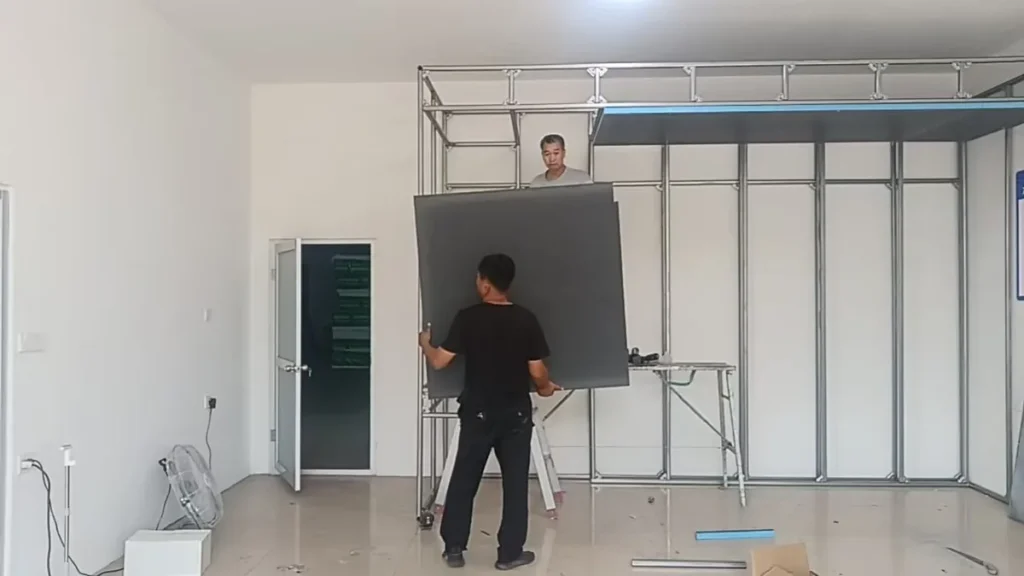
Waterproof backer board is primarily selected for applications where wall surfaces may be exposed to water, humidity or frequent splashing.
| Application | Typical Use | Why Backer Board Is Considered |
|---|---|---|
| Shower walls | Tile substrate behind shower finishes | Frequent water exposure |
| Bathrooms | Walls around showers and tubs | High humidity and splashing |
| Wet rooms | Walls and other tiled surfaces | Continuous moisture management |
| Kitchens | Backsplashes and wet zones | Protection around water sources |
| Basements | Selected interior wall applications | Moisture-prone environment |
| Commercial bathrooms | High-use wet areas | Durable and efficient installation |
| Hotels | Bathroom and shower construction | Repeated moisture exposure |
| Public shower areas | Wall systems behind tile | Demanding wet-area conditions |
The exact application should always be evaluated according to the board’s technical specifications and installation requirements.
Shower Walls
Shower walls are one of the most common applications for waterproof backer board.
A shower wall must handle repeated exposure to water and humidity while providing a stable surface for tile. A suitable waterproof backer board can form an important part of this wall assembly.
It can be used for standard showers, walk-in showers, bathtub surrounds and other tiled shower areas.
Corners, seams and pipe penetrations require particular attention because these areas can create potential paths for moisture if they are not properly treated.
Bathroom Walls
Bathrooms combine several moisture-related challenges.
Even areas outside the direct shower zone can experience humidity and occasional water exposure. Waterproof backer board can therefore be useful in selected bathroom wall applications, especially where tile is planned.
Common locations include shower surrounds, bathtub areas and other moisture-prone sections.
The board should be selected according to the actual exposure level rather than simply installing the same material throughout every part of the bathroom.
Wet Rooms
Wet rooms require careful planning because water may reach multiple surfaces.
In these projects, the backer board is only one component of the overall moisture-management system. Seams, corners, floor-to-wall transitions and service penetrations also need to be properly addressed.
A waterproof backer board can provide a stable substrate for tile while helping simplify wall construction.
Kitchens
Kitchens generally have less direct water exposure than showers, but certain areas can still benefit from a moisture-resistant substrate.
Backer board may be used behind tile in areas around sinks, backsplashes and other locations exposed to repeated splashing.
For commercial kitchens, material selection should take into account cleaning conditions, moisture exposure, tile requirements and the overall wall assembly.
Basements
Basement walls can be exposed to higher humidity and moisture than typical interior walls.
A waterproof or moisture-resistant board may be suitable for certain basement finishing applications, particularly where tile or other moisture-resistant finishes are planned.
However, backer board should not be treated as a replacement for foundation drainage, exterior waterproofing or other measures that control bulk water.
What Is Waterproof Backer Board Made Of?
Waterproof backer boards are available in different constructions.
Many lightweight products use a foam core combined with reinforced surface layers. XPS is one type of foam commonly used in backer board construction.
A typical structure may include:
Foam core + reinforced facing + protective surface layer
This type of construction can combine low weight, moisture resistance, rigidity and suitability for tile installation.
However, specifications vary between products. Buyers should check the manufacturer’s technical data for information such as thickness, density, dimensions, compressive strength and surface compatibility.
Waterproof Backer Board vs Cement Board
Waterproof backer board and cement board can both be used as tile substrates, but their characteristics are different.
| Feature | Waterproof Backer Board | Cement Board |
|---|---|---|
| Primary construction | Often foam-based | Cementitious |
| Weight | Generally lightweight | Generally heavier |
| Handling | Easier to carry and position | More demanding to handle |
| Moisture performance | Designed for moisture-prone applications | Water-resistant but not automatically waterproof |
| Thermal insulation | Some products provide insulation | Limited insulation value |
| Cutting | Generally easier to cut | Usually requires more effort |
| Tile application | Suitable for many tile systems | Widely used for tile systems |
| Typical applications | Showers, bathrooms, wet rooms | Tile substrates and various construction applications |
The best material depends on the project requirements. A contractor should consider the complete wall assembly rather than selecting a board based on one characteristic.
What Are the Main Benefits of Waterproof Backer Board?
Moisture Resistance
The primary reason to select waterproof backer board is its suitability for moisture-prone construction.
It provides a substrate designed to perform in environments where ordinary wall materials may not be appropriate.
Lightweight Construction
Foam-based backer boards are generally lighter than cement-based alternatives.
This can make a noticeable difference during transportation, positioning and installation, particularly when large panels need to be moved around a jobsite.
Easier Handling
A lightweight panel can be easier to cut and position around pipes, fixtures, niches and corners.
This can help contractors work more efficiently and reduce unnecessary handling time.
Tile-Ready Surface
Many waterproof backer boards are manufactured with a surface designed to receive tile and compatible adhesives.
This provides a consistent substrate for the finishing stage when the product is installed according to its specifications.
Thermal Insulation
Some waterproof backer boards use an XPS or similar insulating core.
In these products, the panel can provide both a tile substrate and thermal insulation as part of the wall assembly.
How Do You Choose the Right Waterproof Backer Board?
There is no single board thickness or specification that works for every project.
Before selecting a product, consider the following factors:
| Selection Factor | What to Check | Why It Matters |
|---|---|---|
| Application | Shower, bathroom, basement, commercial area, etc. | Determines environmental requirements |
| Thickness | Available board thicknesses | Affects wall assembly and rigidity |
| Panel size | Standard or custom dimensions | Influences handling and joint layout |
| Core material | XPS or other construction | Affects weight and insulation |
| Surface | Tile and adhesive compatibility | Important for finished surface performance |
| Fastening | Approved screws and fixing methods | Helps maintain system integrity |
| Joint treatment | Compatible tape, sealant or waterproofing materials | Reduces moisture-entry risks |
| Project scale | Residential or commercial | Affects logistics and supply requirements |
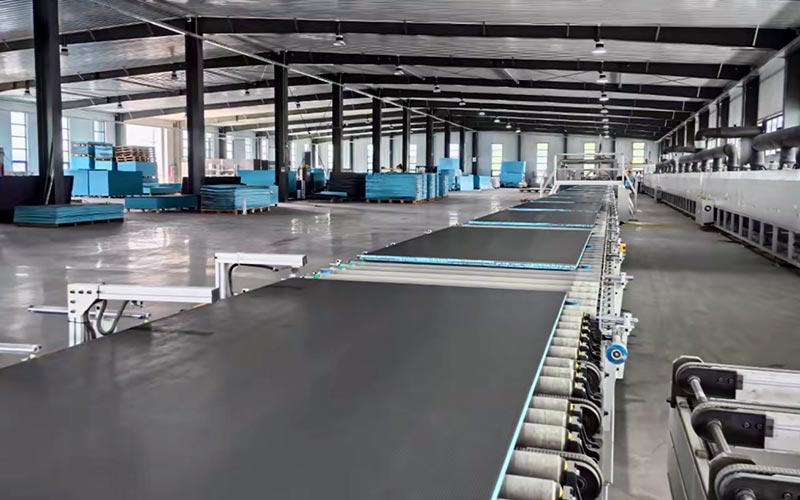
For large projects, buyers should also consider production capacity, packaging, technical support and consistency between batches.
Is Waterproof Backer Board Completely Waterproof?
This question requires an important distinction.
A product marketed as a waterproof backer board is designed to provide water-resistant or waterproof performance as specified by its manufacturer. However, installing the board does not automatically make every part of a finished wall waterproof.
Water can still enter through improperly treated seams, corners, penetrations or transitions.
For this reason, the complete system should be considered during installation.
Important areas include:
- Board joints
- Inside and outside corners
- Pipe penetrations
- Fastener locations
- Floor-to-wall transitions
- Wall-to-wall transitions
- Connections with other waterproofing materials
Following the manufacturer’s installation instructions is essential.
Common Installation Mistakes
The performance of a waterproof backer board depends heavily on proper installation.
One common mistake is assuming that the board alone provides complete protection against every form of moisture intrusion.
Another is overlooking seams and corners. These areas require appropriate treatment according to the product’s installation requirements.
Using incompatible fasteners or accessories can also affect the finished system.
Installers should also plan penetrations and transitions before tile installation begins rather than trying to solve these details after the finished surface is installed.
Is Waterproof Backer Board Suitable for Commercial Projects?
Yes. Waterproof backer board can be considered for a range of commercial wet-area projects.
Potential applications include hotels, apartment buildings, commercial bathrooms, public shower facilities, fitness centers and other moisture-prone interior spaces.
For commercial projects, material selection involves more than basic water resistance.
| Commercial Project Factor | Why It Matters |
|---|---|
| Panel dimensions | Affects installation speed and joint layout |
| Weight | Influences handling and labor |
| Thickness options | Allows different wall assemblies |
| Surface compatibility | Important for tile installation |
| Packaging | Protects materials during transportation |
| Supply capacity | Important for large projects |
| Quality consistency | Helps maintain predictable installation |
| Technical support | Useful for project-specific requirements |
For distributors and contractors, reliable supply and consistent product specifications can be just as important as the material itself.
How Does Waterproof Backer Board Improve Installation Efficiency?
Material selection affects more than the final wall surface.
A lightweight panel can be easier to move around a construction site and position against walls. Simple cutting can also make it easier to create openings around plumbing and other fixtures.
For larger projects, these small improvements can add up across hundreds or thousands of panels.
Reducing unnecessary handling and simplifying installation can help contractors manage labor and project schedules more efficiently.
What Should Buyers Ask a Waterproof Backer Board Manufacturer?
If you are purchasing waterproof backer board for a construction project or distribution business, asking the right questions before ordering can prevent problems later.
Consider asking about:
- Core material and board construction
- Available thicknesses
- Standard panel dimensions
- Surface and tile compatibility
- Water absorption or waterproofing performance
- Thermal insulation properties
- Recommended fasteners
- Joint treatment requirements
- Packaging and container loading
- Production capacity
- Quality control procedures
- OEM or custom specifications
A reliable manufacturer should be able to provide clear technical information rather than relying only on general marketing claims.
Final Thoughts
Waterproof backer board provides a practical substrate solution for tile and other finishes in moisture-prone areas. Its applications range from showers and bathrooms to wet rooms, kitchens, basements and commercial construction.
The right product should be selected according to the application, board construction, thickness, dimensions, surface compatibility and installation requirements.
For contractors, distributors and project buyers, understanding these factors can help create a more efficient installation process and a better-performing wall system.
FAQ
What is waterproof backer board used for?
Waterproof backer board is mainly used as a substrate for tile and other finishes in showers, bathrooms, wet rooms and other moisture-prone areas.
Is waterproof backer board better than cement board?
It depends on the project. Waterproof backer board is generally lighter and is designed for moisture-prone applications, while cement board is a traditional cementitious tile substrate.
Can you tile directly over waterproof backer board?
Many waterproof backer boards are designed for direct tile installation when the recommended adhesive and installation method are followed.
Can waterproof backer board be used in a shower?
Yes. Shower walls are one of the most common applications for waterproof backer board.
Is XPS backer board waterproof?
XPS has low water absorption, but the waterproof performance of a finished backer board depends on its complete construction, facing materials and installation system.
How thick should waterproof backer board be?
The appropriate thickness depends on the wall construction, application, tile requirements and manufacturer’s specifications.
Does waterproof backer board provide insulation?
Some products use an insulating foam core and can provide thermal insulation in addition to serving as a tile substrate.
Can waterproof backer board be used on basement walls?
It can be suitable for selected basement applications, but it should be part of a properly designed moisture-management system rather than a replacement for structural waterproofing.
What should be sealed on waterproof backer board?
Seams, corners, penetrations, fastener locations and transitions should be treated according to the manufacturer’s installation requirements.
How do I choose a waterproof backer board supplier?
Compare product specifications, quality control, available sizes and thicknesses, production capacity, packaging, technical support and experience with your target market.