
Tile Backer Board for Shower Walls: What Buyers Should Check Before Installation
Table of Contents
Direct answer: A tile backer board for shower walls should be selected by water exposure, tile format, wall flatness, seam treatment, penetrations, fastening support, and pre-tile inspection needs. Buyers should confirm these details before ordering so the board works as part of the complete wet-wall assembly, not as an isolated panel choice.
A shower wall can look simple on the drawing and still fail in the details. The tile, grout, valves, niche, curb line, and cleaning routine all depend on the substrate staying flat, secure, and suitable for wet work. That is why buyers and contractors should evaluate a tile backer board before the order is placed, not after the crew is already cutting panels on site. The right questions reduce rework, make inspection easier, and help the finished shower perform as a complete wall system.
This guide is written for project buyers, bathroom contractors, tile installers, and distributors comparing wall substrates for shower projects. It does not treat every product as identical. A tile backer board should be checked against the real exposure of the room, the planned tile finish, the fastener pattern, the seam treatment, and the support available behind the wall. When those items are reviewed early, the material decision becomes much clearer.
Start With the Shower Wall Exposure Map
Before choosing a tile backer board, mark the areas that will receive direct spray, regular splash, vapor exposure, and cleaning water. A standard shower wall, a tub surround, a locker room shower, and a healthcare wet room do not always need the same coverage. The tile backer board schedule should follow actual water exposure instead of a generic material list.
A useful exposure map includes the shower head wall, plumbing wall, side walls, niche location, bench or seat area, curb or threshold, and any transition to painted drywall. For larger projects, keep this map with the purchase record so the same tile backer board decision can be repeated across multiple rooms. For broader moisture planning language, the EPA offers practical moisture control guidance for buildings.
Check Whether the Board Matches the Tile Finish
The tile finish affects the board decision more than many buyers expect. Small ceramic tile, large-format porcelain, stone-look panels, and mosaic zones all place different demands on flatness and handling. A tile backer board used behind large-format tile should support a flatter wall plane because uneven framing or unsupported edges can show through the final layout.
Ask how the board will be cut, fastened, and aligned before the tile crew begins. The goal is not simply to cover the studs. The goal is to create a predictable surface for tile setting, waterproof detailing, and final inspection. If the project already includes a product comparison, link the decision back to your waterproof backer board products page so buyers can connect the article to available materials.
Compare Waterproof Backer Board and Cement Board
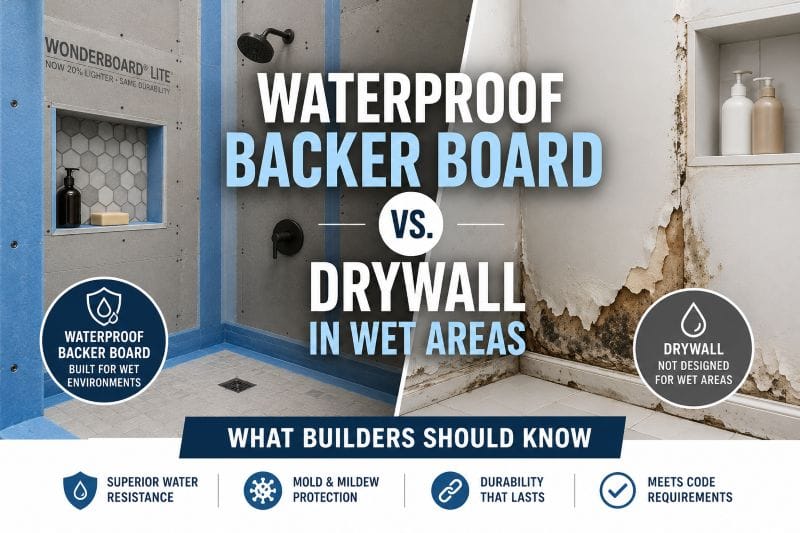
Many searches for tile backer board lead to cement board because cement-based panels have been used behind tile for a long time. However, a shower wall decision should consider weight, handling, cut quality, water management, seam detailing, and whether the board itself is intended to support wet-area planning. A waterproof backer board can be attractive where installers want lighter handling and clearer moisture protection around tiled walls.
| Option | Where it may fit | Buyer question |
|---|---|---|
| Waterproof backer board | Shower walls, bathroom moisture zones, wet-wall renovation, and projects needing easier handling | Does the board simplify moisture-zone planning while giving tile a stable substrate? |
| Cement board | Some tiled walls where the installer will add the required waterproofing details separately | Who is responsible for waterproofing seams, penetrations, and transitions before tile? |
| Drywall or general wall board | Dry areas outside the wet zone where tile and water exposure are limited | Is this surface truly outside splash, cleaning, and vapor exposure? |
This comparison is not about naming one material for every job. It is about making the tile backer board choice match the wall condition and the installation responsibility. The Tile Council of North America also explains that tile assemblies depend on suitable backing, movement accommodation, and installation methods; their tile installation FAQs are useful background for project teams.
Review Seams, Corners, and Penetrations Early
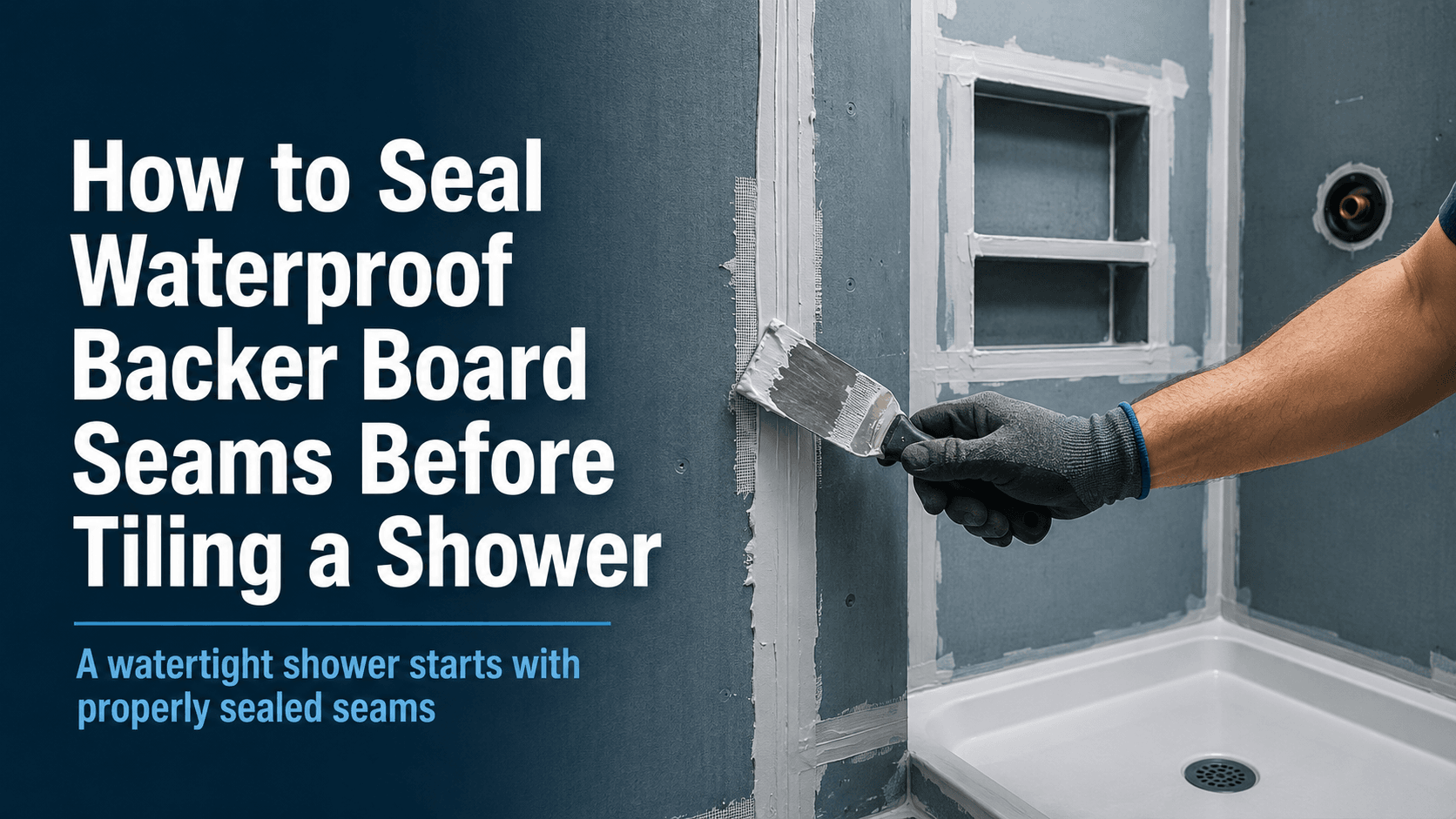
Seams and openings are where many shower walls become difficult to inspect. A tile backer board may be flat across the field of the wall, but the shower valve, pipe openings, niche corners, and board joints still need planned detailing. Buyers should ask how seams are treated, which accessories are used, and when the work is checked before tile covers it.
Inside corners deserve special attention because they combine board edges, waterproofing transitions, and tile layout changes. The same is true for niches and benches, where water can sit longer than on a vertical field wall. If the project includes these features, the tile backer board order should include the relevant auxiliary materials and a clear installation sequence.
Plan Fastening and Support Before Cutting Panels
A shower substrate performs only as well as the framing and fastening behind it. Before a tile backer board is installed, check stud spacing, blocking, edge support, and any accessories that will carry load. Grab bars, shower seats, glass hardware, and shelves should not be treated as afterthoughts. Their locations affect board layout and inspection timing.
For contractors, this is also a practical labor issue. Clean panel layout can reduce awkward cuts, unsupported edges, and last-minute patches. For buyers, it makes procurement more accurate because board quantity, trim pieces, seam materials, and fasteners are tied to the actual wall plan. If the shower is part of a broader bathroom moisture package, connect the plan to the Bathroom Moisture Protection System page.
Use a Pre-Tile Inspection Checklist
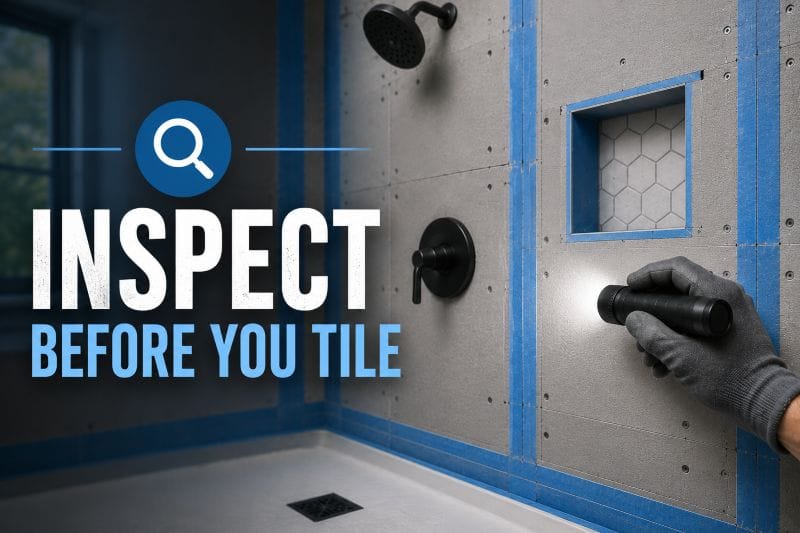
A tile backer board should be inspected while the wall is still visible. Once tile is installed, many decisions are hidden. A short checklist helps owners, supervisors, and installers confirm that the substrate is ready for the finish layer. The checklist should be simple enough to use on site, not buried in a specification that no one opens during installation.
- Confirm the wet-zone boundaries match the drawings and site conditions.
- Check that board edges are supported and panel joints are clean.
- Review fastener spacing, flushness, and any damaged board areas.
- Inspect seams, corners, niches, valves, and pipe penetrations before tile starts.
- Photograph representative walls so later rooms can be compared quickly.
Think About Commercial and Multi-Room Projects
In multi-family housing, hotels, gyms, healthcare facilities, and other repeated wet rooms, the tile backer board decision should be standardized. One sample shower or mockup can establish the expected board extent, seam approach, opening quality, and handoff photos. That standard then helps different crews produce consistent work across many rooms.
Commercial buyers should also think about storage and handling. Boards may sit on site before installation, and damaged edges can create avoidable waste. A clear delivery and storage plan protects the tile backer board before it reaches the wall. For repeated project scopes, the Industrial and Commercial Applications page is a natural internal link for readers comparing system use beyond one bathroom.
Ask Better Supplier Questions
A supplier conversation should go beyond size and availability. Ask where the tile backer board is most suitable, which accessories are normally paired with it, how seams and penetrations should be considered, and what project information helps estimate quantity. Good questions make the quote more useful and reduce the chance of ordering board without the supporting materials needed for a wet wall.
Avoid vague requests such as ?send boards for a bathroom.? A better request includes wall dimensions, tile area, shower type, niche or bench details, expected fixing method, and whether the project is new construction or renovation. That information helps the supplier respond with a practical recommendation instead of a generic product list.
When a Tile Backer Board Is a Strong Fit
A tile backer board is a strong fit when the project needs a stable tile substrate, clear moisture-zone planning, and a cleaner pre-tile inspection process. It is especially useful in shower walls, bathroom renovations, wet rooms, basement bathrooms, and commercial rooms where the same wall condition repeats. The best result comes when the board is selected as part of the whole wall assembly, not as a late substitute.
It may not be the only material in the building. Dry transition walls, ceilings, and non-wet areas may have different needs. The practical decision is to use tile backer board where water exposure, tile load, and inspection value justify it, then keep other surfaces aligned with the project finish schedule.
FAQs About Tile Backer Board
Is tile backer board necessary behind shower tile?
A suitable tile backer board is commonly used behind shower tile because the wall needs a stable substrate and a planned response to moisture exposure. The exact board and detailing should follow the shower design, tile type, and local project requirements.
Can tile backer board replace waterproofing?
Do not assume one product replaces every waterproofing detail. Even when using a waterproof backer board, seams, corners, fasteners, and penetrations still need to be planned and inspected according to the chosen system.
What should buyers check before ordering?
Buyers should check wall dimensions, wet-zone coverage, tile format, niche and valve locations, edge support, accessory needs, and delivery timing. These items make the tile backer board order more accurate.
Is cement board the same as tile backer board?
Cement board is one type of tile backing material, but tile backer board is a broader buying term. Different boards vary in weight, handling, water resistance, cutting method, and wet-area detailing requirements.
Where should I use internal project photos?
Use photos before tile installation to document board layout, seams, openings, and inspection status. This is valuable for repeated rooms and for any shower wall where hidden work may need to be reviewed later.
Final Thoughts
The best tile backer board decision starts with the wall, not the catalog. Map water exposure, check the tile finish, plan seams and openings, confirm fastening support, and inspect the substrate before tile begins. When those steps are clear, the board becomes part of a reliable shower wall system rather than just another material line on the purchase order.
For shower walls, bathrooms, basements, and commercial wet areas, Shengtu can help buyers review board requirements and related materials before ordering. Share your wall dimensions, project type, and moisture-zone plan through the contact page so the discussion starts with the right technical context.