
Light steel keel profile thickness: Read actual steel thickness in a framing quotation
Table of Contents
Light steel keel profile thickness requires a clear decision about confusing nominal gauge with measured base-metal thickness. For contractors, distributors and project buyers, the useful next step is to compare declared dimensions and thickness on the same basis. This guide explains which details to review, what evidence to request and how to organise a practical check before purchasing or concealing the work.
Treat light steel keel profile thickness as part of a defined construction assembly. The advice below does not assume a universal spacing, strength, temperature limit or cure time. Those values must come from the exact selected product and the accepted project design. Keeping that distinction clear makes a technical enquiry more useful and reduces the chance of comparing products that serve different duties.
Light steel keel profile thickness: the decision that matters
The starting point for light steel keel profile thickness is to compare declared dimensions and thickness on the same basis. The specific risk to address is confusing nominal gauge with measured base-metal thickness. This review focuses on that junction or purchasing decision, with the surrounding materials considered only where they affect the result. Take the project drawing and the actual sample to the same discussion so the intended detail can be checked against something measurable.
A useful specification for light steel keel profile thickness should explain the required function, the materials it touches and the conditions under which it will be installed. Record those items before comparing prices. If the answer depends on a load, a material grade or an approved assembly, obtain that information for the exact product. An unrelated certificate or an attractive product photograph cannot fill a gap in the technical schedule.
Match the member to the actual partition duty
Light steel framing can serve structural or nonstructural purposes depending on its design. Establish the duty of the proposed partition before selecting a section. Wall height, board arrangement, openings, fixture loads and required performance can all affect the choice. Ask for verification applicable to the complete wall arrangement. Matching the overall width of two members does not prove that their thickness, lips, material or connection capacity are equivalent.
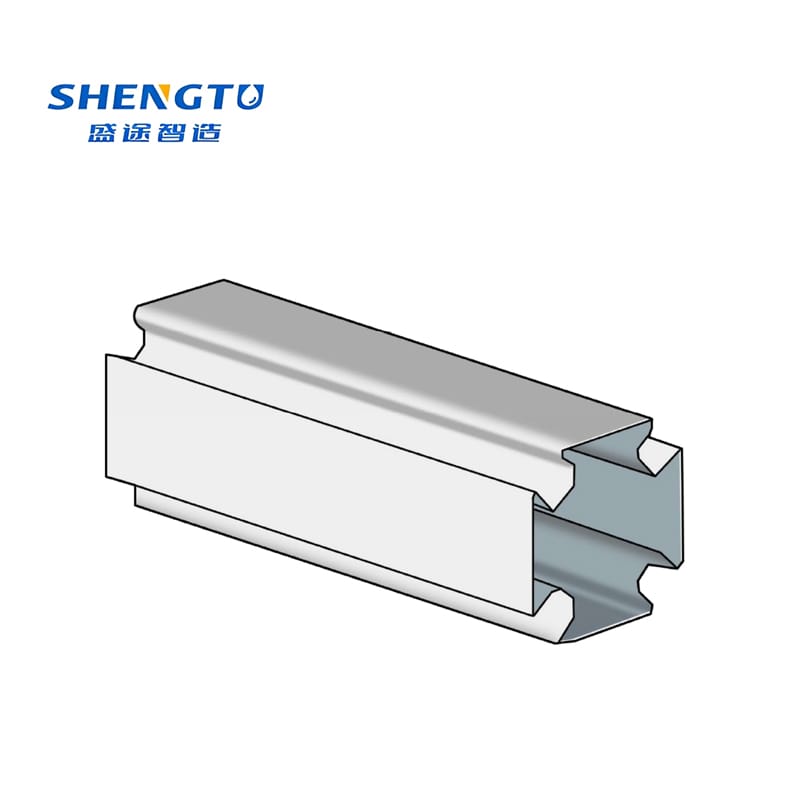
Use a dimensioned section and an explicit thickness basis when comparing quotations. Nominal gauge designations can be ambiguous between suppliers or markets. Clarify whether the stated figure refers to base metal or an overall coated measurement. Review flange and lip dimensions because these control board support and accessory engagement. A narrow change that seems unimportant in a material list can prevent a connector or fixing from working as intended.
For light steel keel profile thickness, apply these checks to the precise issue of confusing nominal gauge with measured base-metal thickness. Mark the relevant location on the drawing and identify what must be accepted before the work proceeds.
Coordinate board support, services and movement
Set out framing from the finished room dimensions, taking the board and finish build-up into account. Locate board edges, door jambs and fixture reinforcement on the framing layout. Service openings should follow the permitted member details. Unplanned cuts through webs or flanges should be reviewed before they are made, rather than concealed behind a lining. Keep framing support separate from an unsupported assumption that every service can hang from a partition member.
At the head of a partition, preserve any designed movement allowance. An additional fixing can unintentionally lock a detail that was intended to move. Acoustic and fire performance likewise depend on the accepted assembly, including junctions and penetrations. Inspect alignment and connections before lining, using the agreed tolerance and current drawing revision. Record deviations by location so the disposition can be checked before the wall becomes inaccessible.
Light steel keel profile thickness: define the decision before comparing products
Begin with a short statement of the job the material must perform. Distinguish a required function from a preferred appearance or a convenient delivery size. Identify the person responsible for accepting the detail and the document that records the acceptance. This prevents a purchase decision from depending on a description such as premium or heavy-duty that has no measurable meaning within the project.
List the interfaces that can change the selection. Include the supporting base, adjacent material, exposure, available space and installation access. Review one representative junction with the contractor before sending the enquiry. A product can meet an isolated material requirement and still be unsuitable for an assembly that lacks the right support or compatible accessories. Resolve those dependencies while the specification is still easy to change.
The practical outcome for light steel keel profile thickness is a recorded decision to compare declared dimensions and thickness on the same basis. Keep any unanswered item attached to the specification instead of allowing it to disappear from the quotation comparison.

Standardise the detail across repeated rooms
Repeated rooms make a representative first installation particularly valuable. Choose a room that includes the difficult junctions, service routes and access restrictions expected elsewhere. Inspect the complete sequence, then create a short record of the accepted components and dimensions. A sample that omits the awkward part of the job cannot validate the detail that will cause the most rework.
Keep a variation log for rooms that differ from the standard. Mirror layouts, accessible rooms and service risers can need different components or clearances. Identify those exceptions on the material schedule so the site team does not force one detail into every location. Check the first example of each variation, and keep batches and inspections traceable by room or zone throughout the project.
When reviewing light steel keel profile thickness in this setting, check how the risk of confusing nominal gauge with measured base-metal thickness affects the installation sequence or the materials required. A variation should be shown explicitly on the drawing and material schedule.
Compare options for light steel keel profile thickness
Use the following comparison to separate evidence from assumptions. It is a review tool for light steel keel profile thickness, not a declaration that a named product has passed a project-specific test. Populate it with actual supplier responses and the responsible designer’s accepted requirements. Where a value is missing, request the information before treating alternatives as equivalent.
| Review item | Evidence to request | Decision to record |
|---|---|---|
| Product identity | Exact grade, drawing and current data sheet | Confirm the offered item matches the specification |
| Critical issue | confusing nominal gauge with measured base-metal thickness | compare declared dimensions and thickness on the same basis |
| Interfaces | Actual substrates, adjoining parts and accepted accessories | Confirm preparation, fit and compatibility |
| Installation | Current instructions and accessible inspection points | Approve sequence before the work is concealed |
| Delivery | Identifiable packaging, batch and agreed quantities | Separate deviations before distributing stock |
For independent background relevant to light steel partition framing, see this non-commercial reference. Use it for general context. It is not a certification or approval of a SHENGTU product, and project-specific requirements still need the appropriate material and assembly evidence.
A practical review for light steel keel profile thickness
Imagine that the purchasing team has two plausible options but no agreed drawing of the junction. Start by marking the part of the assembly affected by confusing nominal gauge with measured base-metal thickness. Ask the designer to state the required function and the installer to explain the available working space. Then compare the options against the same recorded requirement. This prevents a supplier’s convenient standard size from becoming the design by default.
For light steel keel profile thickness, close the review with a short decision record: the selected arrangement, the reason it suits the stated application and the evidence still required before release. Include a small sketch or current drawing reference. If the decision is to compare declared dimensions and thickness on the same basis, identify who will supply the missing information and when it must be accepted. Keep commercial ordering behind that technical decision.
The acceptance record for light steel keel profile thickness should identify the selected grade and the conditions for which the reviewed arrangement was accepted.
Discuss light steel keel profile thickness with SHENGTU
SHENGTU lists light steel partition framing within its construction product offering. Review the relevant product range and send the proposed application, drawing, quantity and exposure conditions for discussion. Request written confirmation of the exact grade and compatible accessories before procurement. Availability of a listed product does not establish every performance value needed by a particular project.
For an enquiry about light steel keel profile thickness, include the issue of confusing nominal gauge with measured base-metal thickness and the decision to compare declared dimensions and thickness on the same basis. The team can then respond to a defined requirement. Use the project enquiry page or the form below to share the dimensions and technical questions that still need to be resolved.
Frequently Asked Questions
How do I define the scope of light steel keel profile thickness?
Start with the function required at the actual junction. For light steel keel profile thickness, identify the supporting base, adjacent materials and exposure. Record the drawing location and the person responsible for accepting the detail.
Which issue matters most for light steel keel profile thickness?
Address confusing nominal gauge with measured base-metal thickness before comparing prices. A useful outcome for light steel keel profile thickness is to compare declared dimensions and thickness on the same basis. Make that requirement explicit in the technical enquiry.
For light steel keel profile thickness, can the supplier choose the complete detail?
A supplier can propose a product and supporting information, but the project team must coordinate its use with adjacent construction. Ask for the proposed grade and interfaces, then obtain the relevant design acceptance.
For light steel keel profile thickness, is a product photograph enough for initial approval?
A photograph helps identify appearance and form. It does not establish dimensions, material grade, loading or compatibility. Use a drawing and current product information alongside the actual sample.
For light steel keel profile thickness, when is the enquiry ready to send?
Send it when the application and principal interfaces are clear enough for a comparable response. Identify unresolved items openly and ask bidders to separate exclusions or proposed changes from the base quotation.