
How to Choose the Right Shower Backer Board
A shower wall needs more than an attractive tile finish. Behind the tile, the substrate has to work with the waterproofing system, framing, fasteners and finish materials to create a durable assembly.
That is why choosing the right shower backer board matters.
The best option depends on the shower design, moisture exposure, tile finish, wall construction, installation method and project requirements. A lightweight waterproof board may be an efficient choice for one project, while another application may call for a different substrate or additional waterproofing measures.
This guide explains the main factors contractors, builders and project buyers should consider before selecting a shower backer board.
Table of Contents
What Is a Shower Backer Board?
A shower backer board is a panel installed behind tile or other wall finishes in a shower assembly.
Its job is to provide a suitable substrate for the finished surface while helping manage moisture within the wall system.
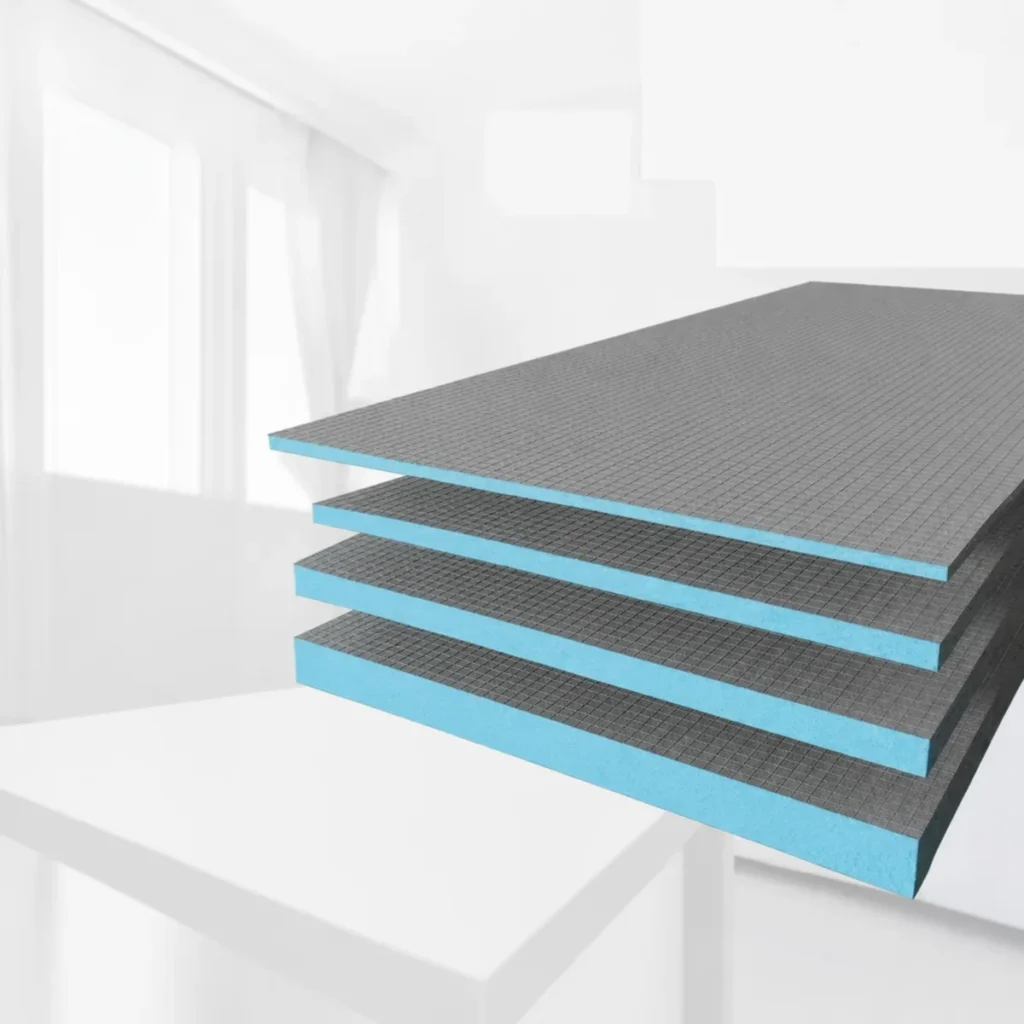
A waterproof backer board is specifically designed for moisture-prone applications. Some products use a closed-cell XPS foam core combined with reinforced surface layers, providing a combination of lightweight construction, moisture resistance and tile-backing capability.
For example, the waterproof backer board supplied by Shengtu uses an XPS core with reinforced polymer mortar and alkali-resistant fiberglass mesh.
However, the board should not be considered the entire shower waterproofing system. Seams, corners, penetrations, transitions and the shower floor all need to be addressed according to the applicable system requirements.
Why Does the Choice of Shower Backer Board Matter?
The substrate affects several stages of a shower project.
A board that is difficult to cut or handle can increase installation time. A substrate that is not compatible with the intended tile system can create problems during finishing. Poorly treated joints or penetrations can also undermine moisture protection.
For this reason, backer board selection should be based on the complete installation rather than simply comparing product names.
The main factors include:
- Moisture exposure
- Board construction
- Thickness
- Weight
- Tile compatibility
- Fastening method
- Joint treatment
- Wall framing
- Thermal requirements
- Project scale
What Should You Look for in a Shower Backer Board?
There is no single specification that determines whether a board is right for every shower.
The following comparison provides a practical starting point.
| Selection Factor | What to Consider | Why It Matters |
|---|---|---|
| Waterproofing | Water resistance and system design | Helps manage moisture behind the finished surface |
| Core material | XPS, cementitious or other construction | Affects weight, handling and performance |
| Thickness | Available thickness options | Influences wall assembly and rigidity |
| Weight | Panel weight per unit area | Affects transportation and installation |
| Surface | Compatibility with tile adhesives | Important for reliable tile installation |
| Dimensions | Panel size and available formats | Affects cutting, layout and joint quantity |
| Fastening | Approved screws, anchors or adhesives | Helps maintain system integrity |
| Joint treatment | Compatible sealants and reinforcement | Important around seams and transitions |
| Insulation | Thermal performance of the board | Useful where insulation is also required |
| Project requirements | Residential or commercial use | Determines performance and supply considerations |
1. Consider the Shower’s Moisture Exposure
The first question is where the board will be installed.
A standard bathroom wall may experience occasional splashing, while a shower wall is repeatedly exposed to water. Steam rooms and other high-moisture environments can have additional requirements.
This distinction matters because not every wall board is intended for the same exposure conditions.
The U.S. Department of Energy’s Building America Solution Center recommends appropriate waterproof or moisture-resistant backing materials behind tiled or other segmented shower and tub enclosures. Its guidance also emphasizes the importance of moisture management within the wall assembly.
For a conventional shower, the board should therefore be selected as part of a planned moisture-management system rather than treated as an ordinary interior wall panel.
2. Check Whether the Board Is Waterproof or Only Water-Resistant
“Water-resistant” and “waterproof” are not interchangeable terms.
Some traditional tile backer boards can tolerate moisture without being completely waterproof. Other products are specifically engineered to provide waterproof performance.
This distinction becomes particularly important in shower construction.
The Tile Council of North America notes that shower construction methods vary according to the backing and waterproofing materials selected. Its shower guidance also emphasizes that the suitability of a particular backer board and membrane combination should be established by the relevant manufacturers and selected for the project.
Before purchasing a board, check the manufacturer’s technical documentation rather than relying only on the product name.
3. Choose the Right Board Thickness
Thickness is another important consideration.
A thicker board is not automatically better. The appropriate thickness depends on the wall construction, framing, tile system and intended application.
For example, a lightweight panel may be selected where the wall assembly requires a thinner tile substrate, while thicker insulation-oriented panels may be used where thermal performance is part of the project objective.
The product specifications should clearly state available thicknesses and recommended applications.
Shengtu’s XPS insulation backer board is available in thicknesses from 20 mm to 150 mm for different insulation applications. This illustrates why thickness should be selected according to the intended system rather than using one specification for every project.
4. Consider Weight and Handling
A shower renovation often involves working in confined spaces.
Large panels need to be carried into the building, moved through doorways and positioned against walls. A heavy board can make these steps more difficult.
Lightweight backer boards can reduce handling effort and make cutting and positioning more convenient.
This can become particularly important on multi-bathroom projects, hotels and residential developments where installers may handle hundreds of panels.
For project buyers, it is useful to evaluate material weight together with panel dimensions, rather than considering either specification separately.
5. Check Tile Compatibility
The backer board is ultimately supporting the finished surface, so compatibility with the intended tile system is essential.
Before selecting a product, check:
- Recommended tile adhesives
- Surface preparation requirements
- Maximum tile size, if specified
- Recommended fastening method
- Manufacturer installation instructions
- Compatibility with waterproofing materials
Large-format tile and natural stone may have different requirements from standard ceramic wall tile.
The Tile Council of North America maintains ANSI installation standards covering various aspects of ceramic tile installation, including backer-unit and bonded waterproof membrane applications.
For a project with unusual tile, high moisture exposure or demanding installation conditions, the substrate and tile system should be reviewed together.
6. Pay Attention to Seams and Corners
A good backer board can still perform poorly if the joints are incorrectly treated.
Shower walls contain numerous potential moisture-entry points, including:
- Panel seams
- Inside corners
- Outside corners
- Pipe penetrations
- Valve openings
- Fastener locations
- Wall-to-floor transitions
These details should be addressed according to the product manufacturer’s instructions.
The International Masonry Institute’s shower details illustrate how shower assemblies integrate framing, backing materials, waterproof membranes, drainage and tile installation rather than treating the backer board as an isolated component.
This is an important principle for both installers and buyers: the board is one component of the system, not the system itself.
7. Evaluate the Wall Framing
The backer board has to work with the framing behind it.
Common framing systems include:
- Wood studs
- Light-gauge steel studs
- Masonry
- Concrete
- Existing wall substrates
The framing must provide an appropriate base for the selected board and finished tile.
This becomes particularly important for larger-format tile because substrate movement or inadequate support can affect the finished installation.
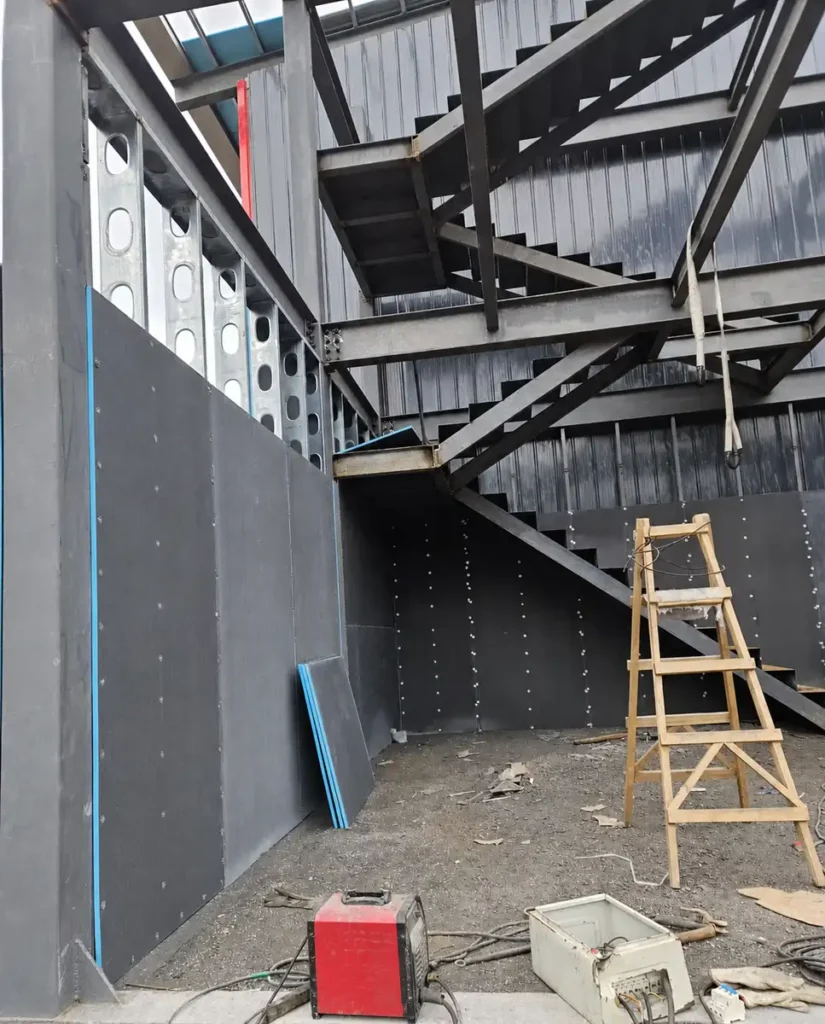
If the project uses a steel framing system, the Quick-Install Keel range can also be considered as part of the overall wall construction solution.
8. Consider Thermal Insulation
Not every shower project requires significant additional insulation, but it can be useful when the backer board is part of a wall assembly where thermal performance matters.
Foam-core boards can combine substrate and insulation functions in a single panel.
XPS is widely used as a rigid cellular polystyrene insulation material. ASTM C578 covers types, physical properties and dimensions of cellular polystyrene insulation, including XPS products.
For buyers considering XPS-based products, specifications such as thermal conductivity, compressive strength, water absorption and dimensional stability are worth reviewing.
Waterproof Backer Board vs Cement Board for Showers
One of the most common purchasing questions is whether to choose waterproof backer board or cement board.
Both can be used in tile assemblies, but they have different characteristics.
| Feature | Waterproof Backer Board | Cement Board |
|---|---|---|
| Typical construction | Foam core with reinforced facing | Cementitious core |
| Weight | Generally lighter | Generally heavier |
| Handling | Easier to move and cut | More demanding to handle |
| Moisture application | Designed for moisture-prone systems | Commonly used as a tile substrate |
| Thermal insulation | Available in some foam-core products | Limited |
| Installation effort | Often easier to handle | Usually requires more labor |
| Best selection criteria | Weight, waterproofing, insulation and installation efficiency | Traditional substrate requirements and project specifications |
The right choice depends on the project and the complete waterproofing design.
If you are comparing the two materials in more detail, see our guide to waterproof backer board vs cement board.
What About Shower Niches, Benches and Curbs?
Shower details can require additional planning.
A niche creates several inside corners and changes in plane. A shower bench introduces horizontal surfaces that may collect water. Curbs and transitions also require careful waterproofing.
These areas should not simply be treated as extensions of a flat shower wall.
The entire assembly should be designed so water is directed toward the drainage system and moisture-sensitive materials are adequately protected.
For complex shower layouts, it is especially important to follow the board and waterproofing manufacturer’s instructions.
How Do You Choose Backer Board for Large Projects?
Material selection becomes more important when the project involves dozens or hundreds of bathrooms.
For commercial or multi-unit housing projects, buyers should consider more than technical performance.
| Project Factor | Questions to Ask |
|---|---|
| Product consistency | Are dimensions and performance consistent between batches? |
| Available sizes | Can panel dimensions reduce cutting and waste? |
| Thickness range | Are multiple thicknesses available? |
| Packaging | Is the board protected during transportation? |
| Production capacity | Can the supplier support the required volume? |
| Customization | Are OEM sizes or packaging available? |
| Technical support | Can installation questions be addressed quickly? |
| Delivery | Can supply schedules match the construction program? |
For distributors, contractors and developers, these factors can have a direct impact on project efficiency.
Shengtu offers OEM sizes and packaging for its waterproof backer board range, which can be useful for projects with specific dimensional or supply requirements.
Common Mistakes to Avoid
Choosing the cheapest board without checking its specifications is one common mistake.
Another is selecting the board based only on thickness. A thicker panel does not automatically provide a better solution if it is incompatible with the wall assembly or tile system.
It is also important not to assume that the board alone waterproofs every part of the shower. Seams, penetrations, transitions and drainage details require their own treatment.
Finally, avoid choosing a product before the tile, framing and waterproofing requirements have been considered together.
Final Thoughts
Choosing the right shower backer board comes down to matching the board to the complete wall and waterproofing system.
For most projects, the key considerations are moisture performance, board construction, thickness, weight, tile compatibility, framing, joint treatment and installation requirements.
Lightweight XPS-based waterproof backer boards can be particularly useful when a project requires moisture protection, easier handling and additional insulation in one construction panel.
For contractors, distributors and project buyers, the best approach is to compare technical specifications with actual site requirements rather than choosing a board based on one feature alone.
FAQ
What is the best backer board for a shower?
The best option depends on the shower design and waterproofing system. A suitable board should be compatible with the intended tile, framing and moisture-management method.
Is waterproof backer board better than cement board?
Neither is automatically better for every project. Waterproof backer boards are generally lighter and can provide additional insulation, while cement board is a widely used traditional tile substrate.
What thickness should shower backer board be?
The required thickness depends on the wall assembly, board type, tile system and manufacturer recommendations.
Can you tile directly over shower backer board?
Many backer boards are designed to receive tile directly when the specified adhesive and installation method are followed.
Does shower backer board need waterproofing?
This depends on the product and system. Some boards are designed as waterproof components, while other backer boards require a separate waterproof membrane. Always follow the manufacturer’s requirements.
Can XPS backer board be used in a shower?
XPS-based backer boards can be designed for wet-area and shower applications. The specific product must be approved for the intended use and installed according to its instructions.
Is lightweight backer board easier to install?
Generally, lightweight panels are easier to transport, position and cut than heavier cement-based boards, although installation still depends on the specific product and project.
What should be sealed on a shower backer board?
Seams, corners, penetrations, fastener locations and transitions should be treated using compatible materials and methods specified for the backer board and waterproofing system.
How do I choose a shower backer board supplier?
Compare technical specifications, quality consistency, available sizes and thicknesses, customization options, production capacity, packaging and technical support before placing an order.