
Cement Board Shower Waterproofing: What to Decide Before Tile
Table of Contents
Direct answer: A cement board shower needs more than a panel choice; buyers must decide who handles waterproofing, how seams and penetrations are treated, where tile starts and stops, and whether a waterproof backer board would make inspection easier for the project team.
Search interest around cement board shower questions is steady because many buyers are trying to solve the same practical issue: tile needs a reliable substrate, but the wall still has to manage water. Cement board is familiar, yet a shower wall is not successful simply because a cementitious panel is installed. The team must understand where waterproofing starts, how it is inspected, and what happens at every opening.
This article helps contractors, distributors, and project buyers evaluate a cement board shower before tile begins. It gives a decision path for comparing cement board with waterproof backer board products where wet-area planning and repeatable installation matter.
Define the Waterproofing Responsibility First
The first question in a cement board shower is not panel size. It is responsibility. Who checks seams, who approves corners, who handles pipe penetrations, and who signs off before tile starts? If those answers are missing, even a well-cut wall can become difficult to trust after the finish is installed.
For moisture planning background, the EPA explains that building moisture control depends on design, construction, operation, and maintenance decisions. That is a useful reminder because the cement board shower is only one part of a larger wet-area assembly. See the EPA moisture control guidance for general building context.
Look Closely at Seams and Inside Corners
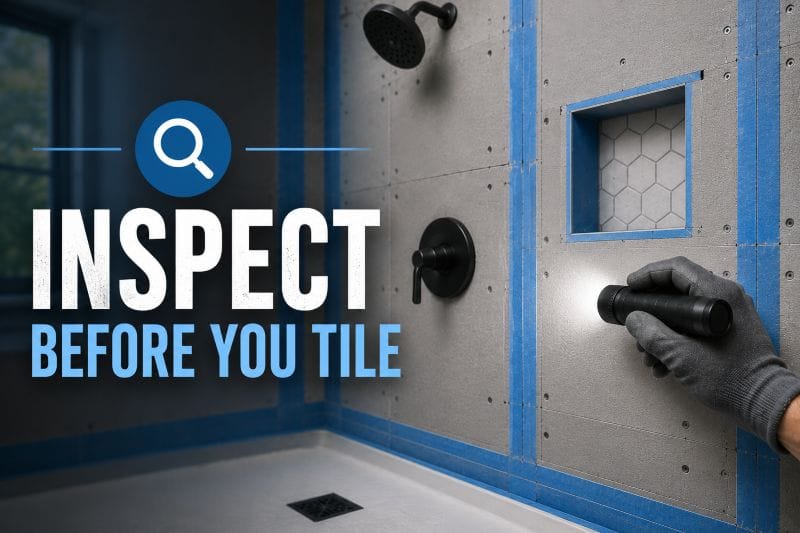
A cement board shower often looks acceptable across the open field of the wall, while the risk sits at joints and corners. Inside corners collect layout changes, board edges, sealant choices, and tile movement. They should be visible for review before tile covers them.
If the project includes niches, benches, valves, or glass hardware, the cement board shower scope should include those details in the pre-tile checklist. That is also where a waterproof board system can appeal to buyers who want a cleaner package around seams and auxiliary materials.
Compare Assembly Choices Before Procurement
| Decision point | Cement board shower question | Waterproof backer board question |
|---|---|---|
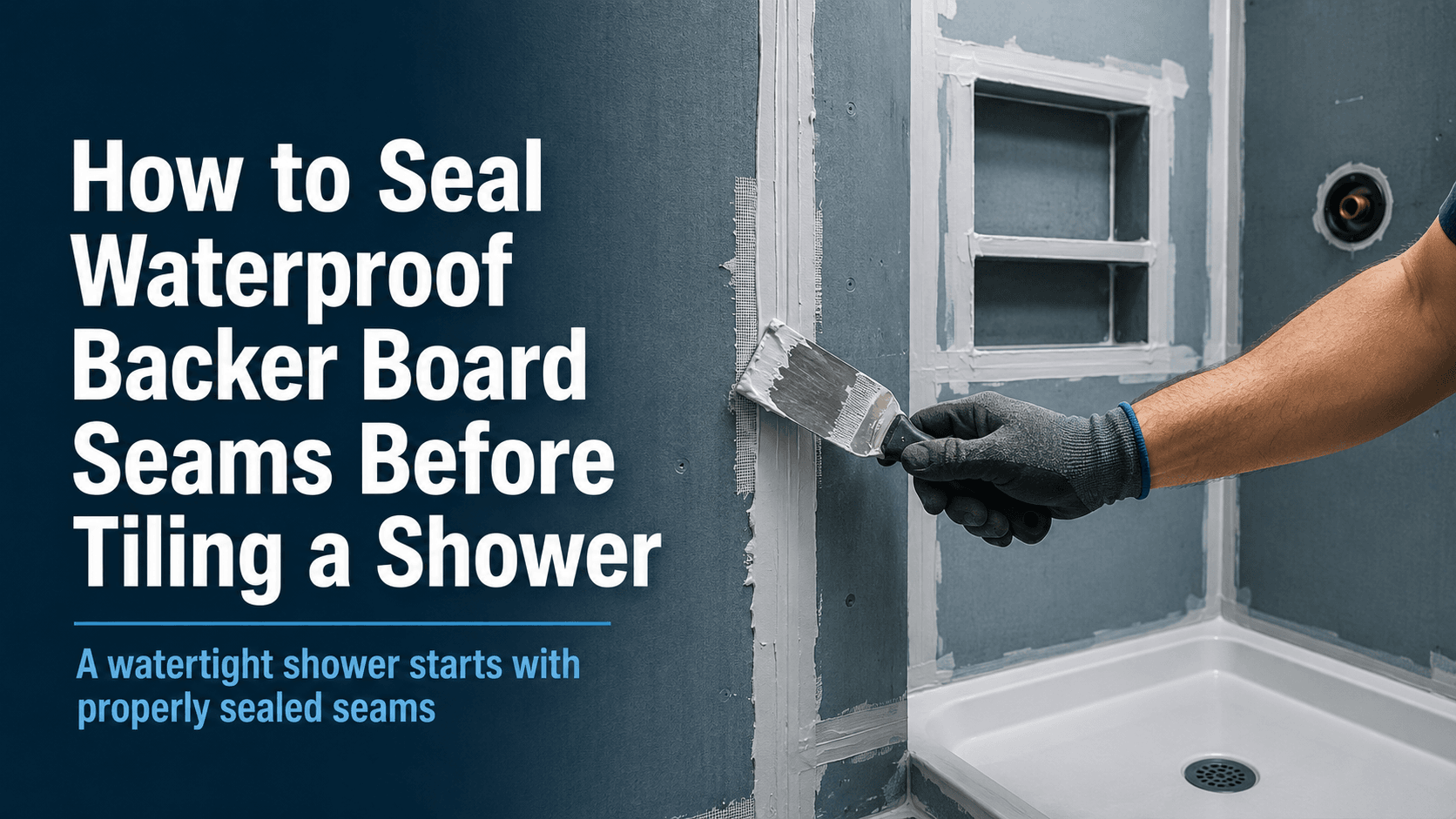
| Water management | Which membrane or treatment completes the wet wall? | Which seams, fasteners, and accessories finish the system? |
| Handling | Will weight and cutting slow repeated rooms? | Can lighter handling improve site consistency? |
| Inspection | Can the waterproofing layer be reviewed before tile? | Can board layout and wet details be checked together? |
| Repeatability | Will different crews interpret the detail the same way? | Can one mockup guide the remaining rooms? |
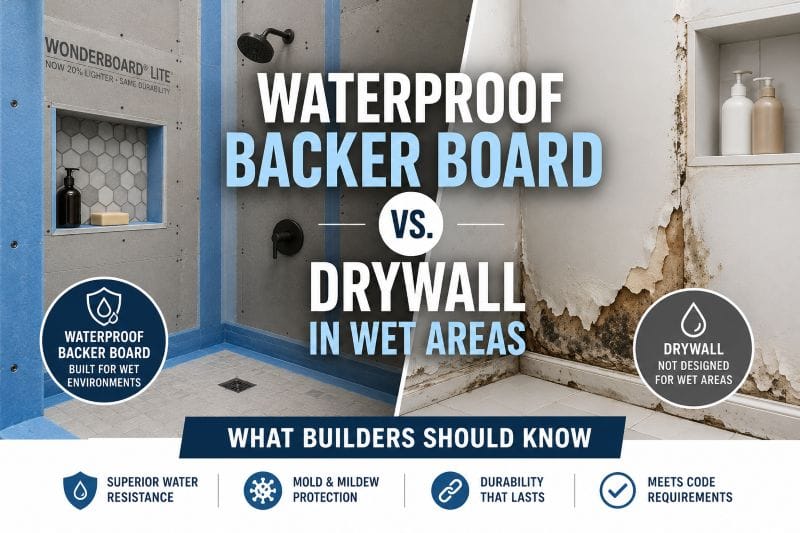
This comparison helps buyers avoid a narrow material debate. A cement board shower can be planned well, but the installation package must be complete. A waterproof board option may be easier to discuss when the project needs simple handoff notes and consistent wet-wall coverage.
Plan Openings Before the Board Is Cut
Valve openings, pipe collars, niches, shelves, and grab bars should be located before boards arrive. A cement board shower with poorly coordinated openings can force patching that should have been avoided in layout. Good planning reduces awkward cuts and gives tile installers a cleaner surface.
Use a Visible Pre-Tile Checklist
- Confirm wet-zone boundaries and tile height before ordering.
- Mark niches, valves, shelves, benches, and glass hardware on the wall plan.
- Check supported edges, fastener locations, and board damage before tile.
- Photograph seams and penetrations for the project record.
- Send unresolved substrate questions to the supplier before installation continues.
For bathrooms where moisture protection is the primary concern, the Bathroom Moisture Protection System page is a helpful internal reference. For repeated wet rooms, the same review can also connect to industrial and commercial applications.
Final Buying Guidance
The best cement board shower decision is made before tile, not after a leak concern or warranty dispute. If the project team can clearly explain waterproofing responsibility, seam treatment, penetration handling, wall flatness, and inspection timing, the assembly is easier to manage.
FAQs About Cement Board Shower Planning
Does a cement board shower need waterproofing?
A cement board shower normally requires planned waterproofing at seams, penetrations, corners, and wet transitions. The exact method depends on the selected system and project requirements.
When should buyers compare cement board with waterproof backer board?
Compare them before ordering, when drawings, tile format, fixture locations, and wet-zone boundaries are still easy to adjust.
What is the most common planning mistake?
The common mistake is assuming the board alone solves the shower wall. Waterproofing responsibility and inspection timing must be assigned clearly.
Can cement board work in commercial showers?
It can be used in some commercial shower assemblies when the detailing is complete, but repeated rooms often benefit from a more standardized wet-wall package.
Which pages should project teams review next?
Review the product page and bathroom moisture protection page to connect material selection with the full wet-area scope.
Project buyers can share room drawings, finish schedules, and wet-zone notes through the contact page so the material discussion starts with the right context.