
Waterproof Backer Board Storage: How to Handle Boards on Site
Waterproof backer board storage affects more than the condition of a few sheets. Poor stacking, damp staging, chipped corners, and rushed handling can turn a tile-ready wall system into a jobsite problem before the first board is fastened. The goal is simple: keep each panel flat, dry, clean, and easy to inspect until it is installed.
For contractors, remodelers, and project buyers, waterproof backer board storage should be planned before delivery. The right storage area helps protect board edges, keeps dust and water away from the surface, and makes it easier for installers to move panels without twisting or impact damage.
Table of Contents
- Plan storage before delivery
- Use flat pallets and dry staging
- Protect edges, corners, and faces
- Move boards without twisting
- Inspect boards before tile work
- Common storage mistakes
- FAQ
Plan storage before delivery
Good waterproof backer board storage starts before the truck arrives. The crew should know where the boards will be unloaded, how far they must travel to the installation area, and whether the route includes stairs, narrow doors, mud, or active wet trades. A product can arrive in good condition and still be damaged if it is dropped into a random corner of the site.
Choose a staging zone that is close enough to the work area but separate from cutting stations, plumbing rough-in, paint work, and demolition debris. If the project includes several bathrooms, wet rooms, or utility spaces, label each stack by room or phase. This reduces unnecessary handling and helps the site supervisor confirm that boards are used in the intended areas.
Use flat pallets and dry staging
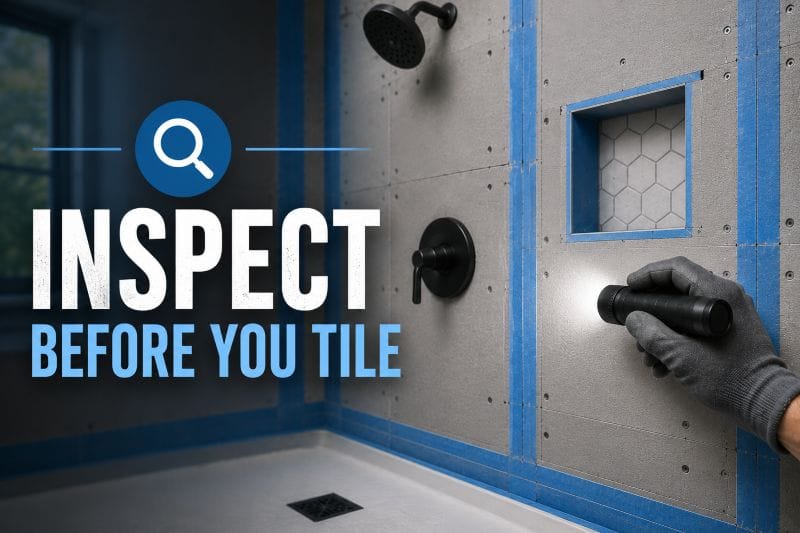
Flat support is the foundation of waterproof backer board storage. Boards should sit on a stable pallet or continuous support, not on uneven blocks, loose pipes, buckets, or scrap framing. Uneven support can bend panels, stress corners, and make the surface harder to align when it is time to fasten the board to the wall.
Dry staging also matters. A waterproof board is selected for wet-area performance after installation, but that does not mean the site should treat stored panels as outdoor material. Keep boards away from standing water, direct rain, and areas where other trades wash tools. If the site is not fully enclosed, protect the stack from weather while allowing enough ventilation to avoid trapped moisture.
| Storage condition | Why it matters | Practical check |
| Flat pallet or platform | Keeps panels from bending before installation | Look for continuous support under the stack |
| Dry interior staging | Protects surfaces from jobsite contamination | Check for leaks, puddles, and wet cutting nearby |
| Clear access route | Reduces impact damage while carrying boards | Confirm doors, corners, and stairs before moving panels |
| Room or phase labels | Prevents unnecessary handling and mix-ups | Mark stacks by bathroom, shower, or project zone |
Protect edges, corners, and faces
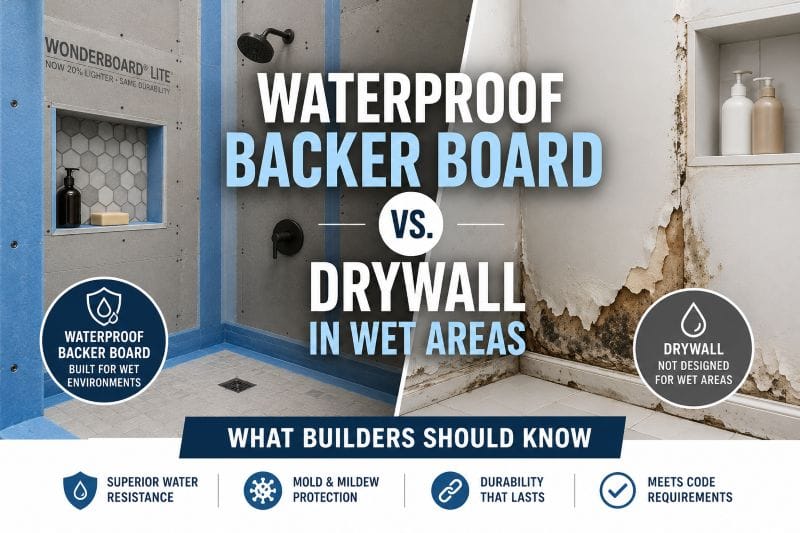
Edges and corners deserve special attention because they often become the first failure point in poor waterproof backer board storage. A chipped corner may seem minor during unloading, but it can complicate layout around shower trays, tub rims, niches, or inside corners. Damaged edges may also create extra cutting, patching, or seam treatment work.
Store panels away from rolling carts, ladders, door swings, and high-traffic paths. Keep heavy tools and boxes off the stack. Do not use stored boards as a temporary workbench. If a board face becomes covered with drywall dust, adhesive residue, oil, or construction dirt, clean and inspect it before installation so bonding surfaces are not compromised.
Move boards without twisting
Handling is part of waterproof backer board storage because most damage happens between the pallet and the wall. Lift boards with enough support, keep them balanced, and avoid dragging edges across concrete or framing. Long panels should be carried so they do not flex sharply around corners or through tight doorways.
Before moving a stack, assign a clear path and remove obstacles. This is especially important on remodels where finished flooring, plumbing rough-in, and existing fixtures create awkward routes. If panels need to be staged upstairs or in several rooms, move fewer boards at a time rather than forcing a heavy stack through a narrow space.
- Carry panels with two people when size or site conditions make solo handling risky.
- Avoid standing panels directly on vulnerable corners for long periods.
- Keep cutting, drilling, and dusty work away from stored board faces.
- Separate visibly damaged panels for review instead of installing them automatically.
Inspect boards before tile work
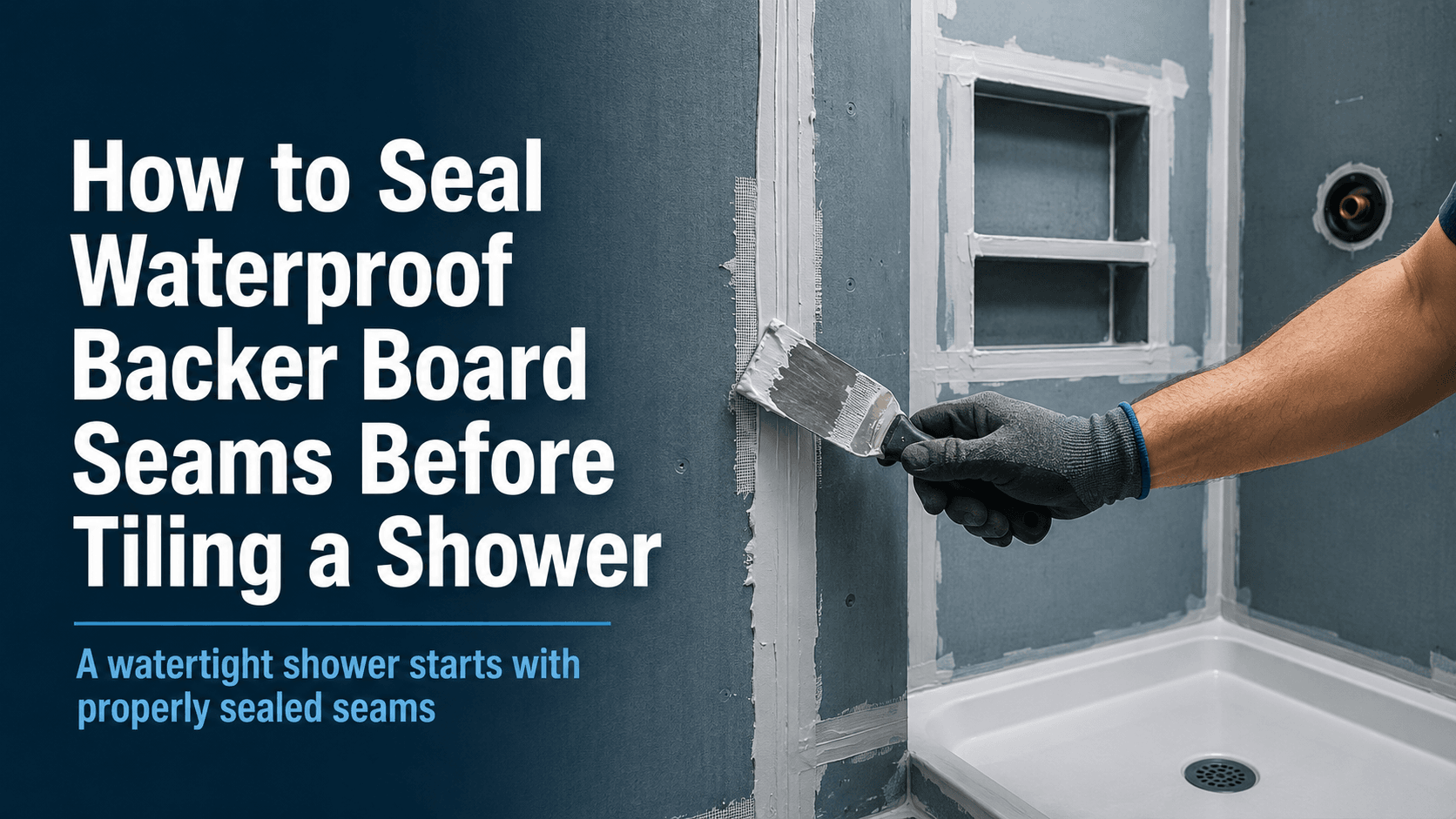
Waterproof backer board storage should end with a short inspection before installation and again before tile work begins. Look for warped panels, chipped corners, loose fasteners, damaged seams, and surface contamination. The inspection does not need to be complicated, but it should happen while the wall is still visible.
A simple photo record helps on commercial projects, hotel bathrooms, multi-unit housing, and contractor handoffs. Photos can show how boards were stored, where panels were installed, how seams were treated, and whether penetrations were prepared before tile covered the wall. That record is useful when several trades share responsibility for the wet area.
Common storage mistakes
The most common mistakes are usually practical rather than technical. Boards are left near a doorway, leaned against uneven framing, placed under heavy materials, or moved too many times because the storage location was not planned. These issues are avoidable with a short site briefing before delivery.
Do not assume waterproof backer board storage is only the supplier’s responsibility. Once the material is accepted on site, the project team controls the environment, handling route, and inspection timing. A clean, flat, dry storage plan protects the product and helps installers build a better substrate for tile.
FAQ
Does waterproof backer board need indoor storage?
Indoor storage is usually the safer choice. Waterproof backer board storage should keep panels dry, flat, and clean before installation, especially on projects where tile bonding, seam treatment, and inspection quality matter.
Should waterproof backer board be stored flat or upright?
Flat storage on stable support is preferred for most jobsite staging. Upright storage can stress corners or edges if panels are leaned unevenly, bumped, or left in a high-traffic area.
Can a chipped board still be installed?
It depends on the location and severity of the damage. Separate damaged panels for review, avoid using compromised edges in critical wet-area details, and follow the project specification before installing them.
Need board options for a wet-area project? Review our waterproof backer board product information or contact the project team for application-specific support. For broader construction storage principles, see the OSHA material handling and storage guidance.