Product Overview
Product Definition:
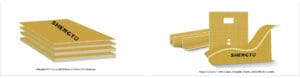
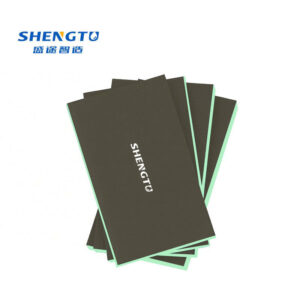
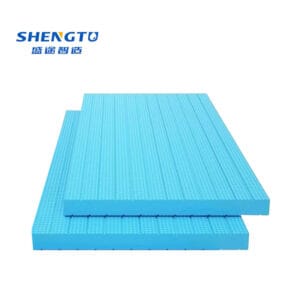
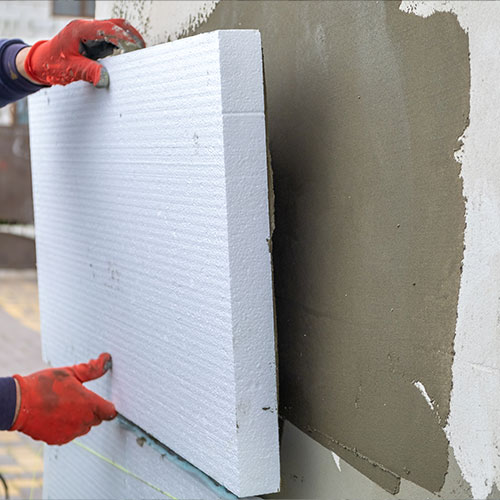
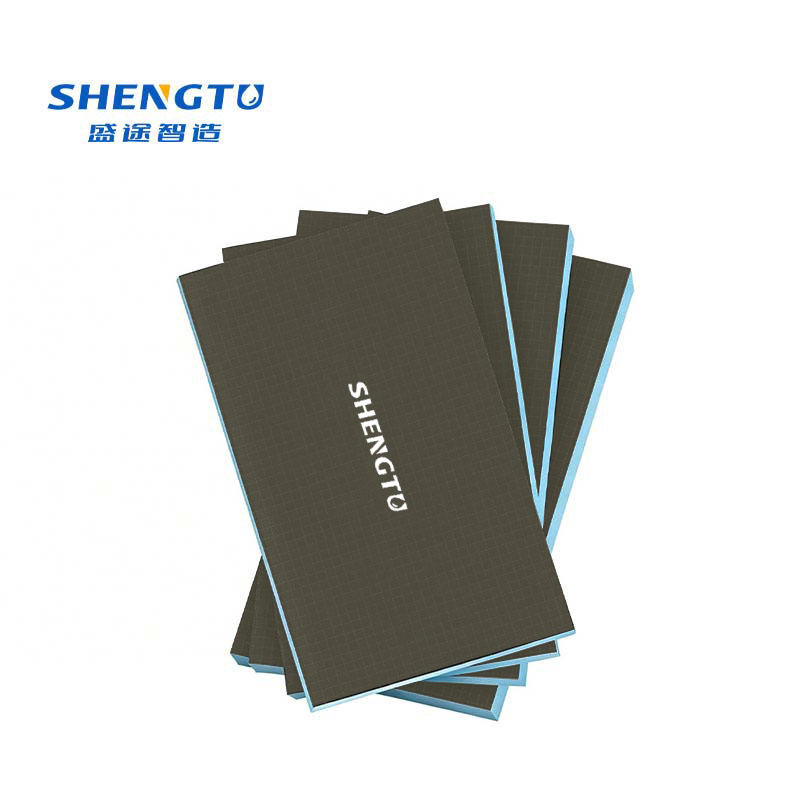
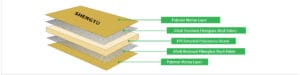
Shengtu Board is a composite panel prefabricated in a factory, featuring an XPS extruded polystyrene board core material, with its upper and lower surfaces laminated with a reinforcing layer consisting of 1.0 mm to 1.5 mm thick polymer mortar and alkali-resistant fiberglass mesh.
Core Technology:
As the core structural component within the XPS composite panel, the polymer mortar in the reinforcement layer consists primarily of low-alkali cement, modified polymer emulsion, quartz sand, and similar materials. The company has modified the original polymer mortar formulation by incorporating materials such as nano-oxide fibers and novel antimicrobial and anti-mold additives. This modification has significantly enhanced the bonding strength between the polymer mortar layer and the core material, as well as the impact resistance of the composite panel, thereby improving the long-term application stability of the XPS composite panel. Furthermore, the antimicrobial and anti-mold additives serve to further reduce water vapor penetration and absorption, thereby enhancing the composite panel’s water resistance and moisture-proof properties. This improvement is reflected in a qualitative leap in its anti-mold and antimicrobial ratings, ensuring an indoor environment that is safe and free from contamination.
Product Positioning:

Product Structure
Polymer Mortar:
Polymer mortar exhibits high bonding strength with the core material, robust surface impact resistance, and exceptional moisture-proofing, impermeability, and mold-resistance capabilities. Furthermore, it possesses characteristics such as high-temperature resistance, anti-aging properties, and freeze-thaw durability, while fully complying with various environmental protection standards. The structural configuration—in which the polymer mortar is composited onto the surface of the core material—significantly enhances the convenience and reliability of subsequent construction processes.
Alkali-Resistant Fiberglass Mesh:
This mesh exhibits excellent rigidity and dimensional stability, effectively enhancing the overall toughness of XPS composite panels. Possessing outstanding resistance to both acids and alkalis, along with robust chemical stability, it ensures that the material remains free from aging and corrosion throughout its long-term service life.
XPS Extruded Polystyrene Board:
XPS extruded polystyrene board utilizes polystyrene resin as its raw material and employs advanced, eco-friendly carbon dioxide foaming technology, offering superior thermal insulation, excellent moisture resistance, and high compressive strength.
 Product Advantages
Thermal Insulation & Energy Efficiency | Heat & Cold Barrier | Soundproofing & Noise Reduction | Moisture & Mold Resistance | Material Conservation & Carbon Reduction | Leveling & Thin-Set Application | Lightweight & Easy Installation | Eco-friendly & Sustainable
Performance Specifications
Product Advantages
Thermal Insulation & Energy Efficiency | Heat & Cold Barrier | Soundproofing & Noise Reduction | Moisture & Mold Resistance | Material Conservation & Carbon Reduction | Leveling & Thin-Set Application | Lightweight & Easy Installation | Eco-friendly & Sustainable
Performance Specifications
| Test Items | Metric Requirements |
| Premium Board | Eco-board |
| core Material | Apparent density, kg/m³ | ≥35 | ≥40 |
| Compressive Strength (10% Deformation), kPa | ≥350 | ≥500 |
| Thermal Conductivity (Average Temperature 25°C), W/(m·K) | ≤0.030 |
| Water Absorption (96 h immersion), % | ≤1.5 |
| Dimensional Stability (70±2°C, 48 h), % | ≤1.0 |
| Combustion Performance Classification | No lower than Grade B₁ |
| Oxygen Index (%) | ≥30 |
| Flexural Deformation (mm) | ≥20 |
| Compressive Creep (40°C, 40 kPa, 168 h) (%) | ≤1.5 |
| Water Vapor Permeability Coefficient [ng/(m·s·Pa)] | 1.5~3.5 |
| Total Volatile Organic Compound (TVOC) Emission [mg/(m²·h)] | ≤1.000 |
| Tensile Strength Perpendicular to Board Surface (MPa) | ≥0.40 |
| Foaming Agent Content (%) | The use of chlorofluorocarbon blowing agents is prohibited. |
| Flame Retardant Type (mg/kg) | Hexabromocyclododecane shall not be detected. |
| Smoke Toxicity Class | Attains Quasi-Safety Level 1 (ZA₁) |
| XPS Composite Board | Interlayer Bond Strength (MPa) | ≥0.40 |
| Surface water absorption, g/m² | ≤150 |
| Impermeability | The inner side of the reinforcement layer is not penetrated. |
| Impact Resistance (Number of Impacts) | ≥10 |
| Humidity Deformation (%) | ≤0.07 |
| Shear strength, kPa | ≥250 |
| Bending load, N | Not less than the self-weight of the plate. |
| Free formaldehyde emission, mg/(m²·h) | ≤0.025 |
| Antibacterial Properties | Antibacterial rate ≥ 90% |
| Mold Resistance | Level 0 or Level 1 |
| Compressive Elastic Modulus, MPa | Thickness ≤ 20 mm | ≤0.50 |
| Thickness > 20 mm | ≤1.20 |
| Radioactivity | Internal Radiation Index (IRa) | ≤1.0 |
| External Radiation Index (Ir) | ≤1.3 |
Performance Specifications for XPS Composite Board Thermal and Acoustic Floor Systems:
| Test Items | Metric Requirements |
| Weighted Normalized Impact Sound Pressure Level, dB | ≤65 |
Construction Method
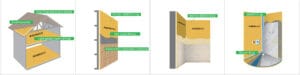
Roof Construction Methods
Method 1:
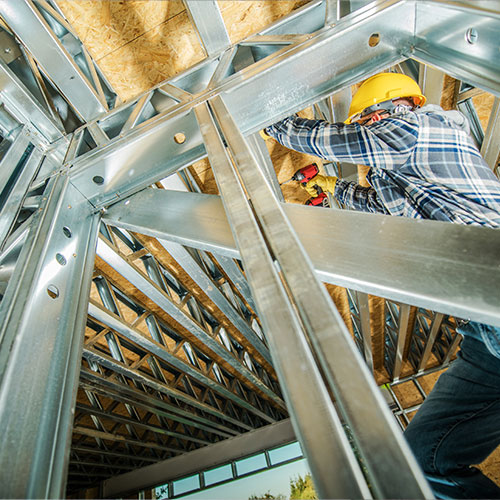
1. Lay OSB panels flat over the light-gauge steel framing on the roof and secure them using fasteners.
2. Lay XPS composite panels flat over the OSB surface and secure them using fasteners (the XPS composite panels and OSB panels must be laid in a staggered pattern).
3. Seal the joints between the XPS composite panels using Shengtu sealant, then embed a layer of fiberglass mesh tape over the joints. Use a suitable trowel to smooth the sealant, ensuring that both the fiberglass mesh and the fasteners are completely covered; this completes the roof’s waterproofing and thermal insulation layer.
4. Once the sealant has fully dried (approximately 1–2 hours), lay the roofing tiles over the XPS composite panels and secure them in place to complete the project. This method is suitable for various roofing materials, including asphalt shingles, resin tiles, color-coated steel tiles, and glazed tiles.
Method 2:
1. Lay OSB panels flat over the light-gauge steel framing on the roof and secure them using fasteners.
2. Cut XPS composite panels into strips 40–50 mm wide; secure these strips to the OSB panels at intervals of 30 mm. Then, lay full XPS composite panels flat over the strips to create an air cavity, securing them in place with fasteners.
3. Seal the joints between the XPS composite panels using Shengtu sealant, and embed a layer of fiberglass mesh tape over the joints. Use a suitable trowel to smooth the sealant, ensuring that both the fiberglass mesh and the fasteners are completely covered; this completes the roof’s waterproofing and thermal insulation layer.
4. Once the sealant has fully dried (approximately 1–2 hours), lay the roofing tiles over the XPS composite panels and secure them in place to complete the project. This method is suitable for various roofing materials, including asphalt shingles, resin tiles, color-coated steel tiles, and glazed tiles
Exterior Wall External Insulation Construction Methods
1. Clean the substrate surface of the exterior wall, removing any visible impurities;
2. Based on the designated installation location on the exterior wall, determine and verify the dimensions of the XPS composite panels;
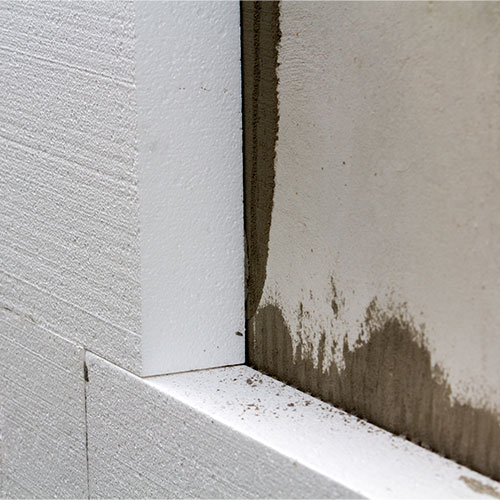
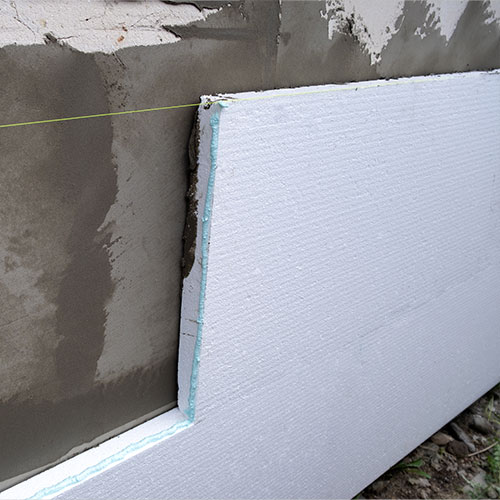
3. Proceed with the adhesive installation of the XPS composite panels according to the established positioning; the panels shall be affixed using the “dot-and-frame” method, ensuring an effective bonding area of no less than 50%;
4. Twenty-four hours after the installation of the composite panels is complete, install mechanical anchors to provide supplementary fastening (at a density of 4 to 6 anchors per square meter);
5. Upon completion of the anchor installation, apply a layer of anti-crack mortar reinforced with alkali-resistant fiberglass mesh across the entire surface (to a thickness of 3 mm to 5 mm);
6. Apply exterior wall finishes—such as exterior paints, “True Stone Paint,” or “Water-in-Sand” coatings—to complete the exterior wall surface treatment.
Construction Methods for Interior Insulation of Exterior Walls
1. Clean the substrate surface of the interior wall, removing any visible impurities.
2. Based on the designated installation location for the interior wall, determine and verify the dimensions of the XPS composite panels.
3. Proceed with the adhesive installation of the XPS composite panels according to the established positioning. The panels shall be affixed using the “dot-and-frame” method, ensuring an effective bonding area of no less than 40%. During the bonding process, simultaneously level the wall surface to ensure flatness; bonding mortar must be used to seal any gaps between the panels and the substrate.
4. If mechanical fasteners are required to anchor the XPS composite panels to the substrate wall, the density of fasteners shall be 4 to 6 units per square meter.
5. Use bonding mortar to fill and seal all gaps between the panels, then apply and embed a layer of fiberglass mesh fabric.
6. Reinforce critical areas—such as the four corners of windows—with alkali-resistant fiberglass mesh fabric to prevent cracking.
7. Apply rust-inhibiting paint to the exposed surfaces of the mechanical fasteners to prevent corrosion.
8. Apply a finishing layer consisting of putty followed by paint or wallpaper/wall fabric; alternatively, use tile adhesive to bond ceramic tiles as the final surface finish.
Construction Methods for Bathroom Walls and
1. Complete the leveling of the substrate (concrete surface);
2. Install XPS composite boards and floor drain boards;
3. Lay fiber mesh fabric flat over the joints, then apply Shengtu sealant to fully coat, cover, and smooth the surface;
4. Install the floor drain, and reinforce the floor joints using Shengtu sealant and waterproofing fabric;
5. Upon successful completion of a 48-hour water-retention test, proceed to the next construction stage;
6. Once the sealant has fully dried (approximately 1–2 hours), perform surface finishing and install tiles using the thin-bed method;
7. Clean the wall surface;
8. Use tile adhesive to level the wall surface, bond the Shengtu boards in place, and secure the boards to the substrate wall using mechanical anchors (4 to 6 anchors per square meter);
9. Apply a full coating of 3–5 mm of tile adhesive to the surface of the Shengtu boards, then install wall tiles using the thin-bed method.
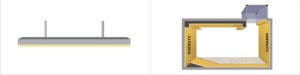
Ceiling Installation Methods
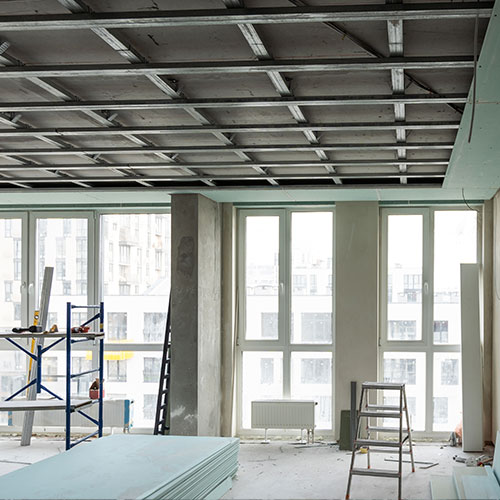
1. Install the light-gauge steel keel for the suspended ceiling.
2. Install the XPS composite panels onto the steel keel, securing them in place using threaded fasteners and washers.
3. Seal the joints between the XPS composite panels using Shengtu sealant.
4. Apply fiberglass mesh tape over the joints, then smooth a layer of Shengtu sealant over the mesh tape, as well as over the threaded fasteners and washers.
5. Apply finishing treatments to the ceiling surface, such as skim coating (puttying) and painting.
Basement Construction Methods
1. Level the existing wall surface; then, using cement mortar and mechanical anchors, affix the XPS composite panels to the wall.
2. Level the existing floor surface; then, using cement mortar as an adhesive, lay the XPS composite panels flat on the floor.
3. For the ceiling, refer to standard suspended ceiling construction methods.
4. At the joints, apply fiberglass mesh fabric and Shengtu sealant; use a specialized trowel to scrape the sealant smooth, ensuring it completely covers the fiberglass mesh.
5. Once the sealant has fully dried (approximately 1–2 hours), proceed with the final surface finishing—such as applying putty, followed by painting or hanging wallpaper (or fabric), or using tile adhesive to install ceramic tiles.
Application Scenarios
Seven Major Series: [Roof Insulation & Thermal Barrier Series] [Interior & Exterior Wall Insulation Series] [Bathroom Leveling & Moisture-Proofing Series] [Basement Moisture-Proofing Series] [Partition Walls & Suspended Ceilings Series] [Kitchen Countertop Series] [Swimming Pool Series]
Shengtu XPS Composite Panels of Various Thicknesses and Their Application Scenarios:
Shengtu XPS composite panels are generally suitable for use on walls constructed from various materials—such as concrete, masonry, or stud framing—and, depending on specific construction objectives, can serve as moisture barriers, thermal insulation layers, or soundproofing layers.
XPS composite panels measuring 40 mm or thicker are suitable for use as thermal insulation for residential roofs;
30 mm XPS composite panels are suitable for use in residential basements or on walls where thermal insulation is required;
20 mm XPS composite panels offer versatile applications: they can be installed on stud framing with 60 cm spacing, or on concrete walls that are difficult to level (utilizing a “dot-and-dab” adhesive method with mortar lumps combined with mechanical anchors to achieve self-leveling); furthermore, they are suitable for encasing pipes, cladding wall-mounted toilet support frames, serving as a substrate for paving sintered stone on stair treads, providing backing for ceramic tile finishes on swimming pool walls, and acting as a stone countertop underlayment in kitchens;
12 mm XPS composite panels can be installed on stud framing with spacing between 30 cm and 40 cm to construct partition walls, room dividers, or suspended ceilings; they can also be applied to residential walls with excellent surface flatness to serve as a backing layer for decorative finishes;
10 mm XPS composite panels are suitable for use in residential suspended ceiling applications.
The 6mm XPS composite board can be used as a backing layer—replacing traditional carpentry boards or OSB—for batten-framed feature walls, and serves as a substrate for the installation of sintered stone slabs

Bathroom Applications: [Floor Backing] [Wall Backing] [Water Retainers] [Ceilings] [Prefabricated Shower Bases] [Bathtub Surrounds] [Wet/Dry Separation Partitions] [Pipe Encasements] [Vanity Bases] [Toilet Backing]

 Product Advantages
Thermal Insulation & Energy Efficiency | Heat & Cold Barrier | Soundproofing & Noise Reduction | Moisture & Mold Resistance | Material Conservation & Carbon Reduction | Leveling & Thin-Set Application | Lightweight & Easy Installation | Eco-friendly & Sustainable
Performance Specifications
Product Advantages
Thermal Insulation & Energy Efficiency | Heat & Cold Barrier | Soundproofing & Noise Reduction | Moisture & Mold Resistance | Material Conservation & Carbon Reduction | Leveling & Thin-Set Application | Lightweight & Easy Installation | Eco-friendly & Sustainable
Performance Specifications