
What Contractors Should Document When Installing Waterproof Backer Board
Inhaltsverzeichnis
What Contractors Should Document When Installing Waterproof Backer Board is a practical topic for contractors improving installation records because the wall behind tile determines how confidently the finished space can handle water, cleaning, and daily use. The focus is not on selling a single detail as a miracle fix. It is on using waterproof backer board in the right places, with the right checks, so the visible finish has a better foundation.
The search intent behind this guide is simple: create useful installation records that reduce disputes and support future maintenance. Readers usually do not need another broad definition. They need to know what to check, what to ask, and how a waterproof backer board choice changes real decisions on site.

Fragen zum Festlegen der Richtung
Vor der Auswahl eines wasserdichten Backerboards sollte das Projektteam langsamer werden und den Raumzustand definieren, die folgenden Fragen helfen dabei, das Gespräch vom allgemeinen Produktinteresse in einen klaren Nassbereich zu führen.
- What was installed?
- Where were seams and penetrations?
- Who inspected before tile?
- Which photos help later service work?
| Record | Why it helps |
|---|---|
| Board photos | Shows hidden layout before tile |
| Material note | Clarifies what was installed |
| Inspection signoff | Confirms readiness |
| Room label | Useful for multi-room projects |
Documentation Is Part of Professional Installation
Professional installation is easier to defend when the hidden work is documented. Once tile covers the wall, waterproof backer board layout, seams, fasteners, and penetrations are no longer visible. A simple record protects both the contractor and the owner. Documentation Is Part of Professional Installation is where that planning becomes visible. For contractors improving installation records, this matters because the decision is made once but affects every later trade that touches the room.
The best documentation is practical rather than excessive. A few clear photos, a note on materials used, and a signed inspection point can answer most future questions. The goal is clarity, not paperwork for its own sake. Documentation Is Part of Professional Installation is where that planning becomes visible. In this section, the practical goal is to make the wall easier to inspect before the finish hides the work.
Contractors can also use records to train crews. When installers see the same photo sequence and checklist on repeated jobs, the waterproof backer board standard becomes easier to follow. Documentation Is Part of Professional Installation is where that planning becomes visible. The detail does not need to be complicated, but it should be deliberate enough that the crew can repeat it without improvising.
Photograph the Wall Before It Disappears
The best documentation is practical rather than excessive. A few clear photos, a note on materials used, and a signed inspection point can answer most future questions. The goal is clarity, not paperwork for its own sake. Photograph the Wall Before It Disappears is where that planning becomes visible. In this section, the practical goal is to make the wall easier to inspect before the finish hides the work.
Contractors can also use records to train crews. When installers see the same photo sequence and checklist on repeated jobs, the waterproof backer board standard becomes easier to follow. Photograph the Wall Before It Disappears is where that planning becomes visible. The detail does not need to be complicated, but it should be deliberate enough that the crew can repeat it without improvising.
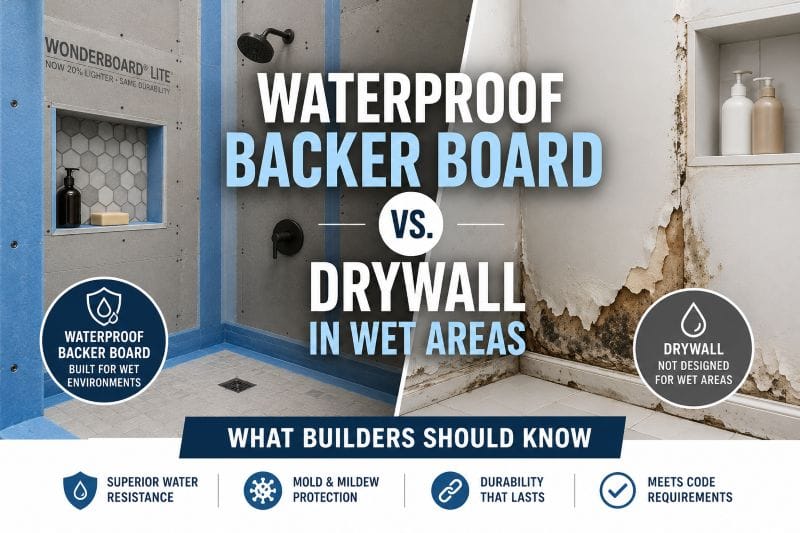
Professional installation is easier to defend when the hidden work is documented. Once tile covers the wall, waterproof backer board layout, seams, fasteners, and penetrations are no longer visible. A simple record protects both the contractor and the owner. Photograph the Wall Before It Disappears is where that planning becomes visible. That is why the conversation should stay close to the room, the water path, and the tile finish rather than drifting into vague product language.
Record Materials Without Turning It Into Paperwork
Contractors can also use records to train crews. When installers see the same photo sequence and checklist on repeated jobs, the waterproof backer board standard becomes easier to follow. Record Materials Without Turning It Into Paperwork is where that planning becomes visible. The detail does not need to be complicated, but it should be deliberate enough that the crew can repeat it without improvising.
Professional installation is easier to defend when the hidden work is documented. Once tile covers the wall, waterproof backer board layout, seams, fasteners, and penetrations are no longer visible. A simple record protects both the contractor and the owner. Record Materials Without Turning It Into Paperwork is where that planning becomes visible. That is why the conversation should stay close to the room, the water path, and the tile finish rather than drifting into vague product language.
The best documentation is practical rather than excessive. A few clear photos, a note on materials used, and a signed inspection point can answer most future questions. The goal is clarity, not paperwork for its own sake. Record Materials Without Turning It Into Paperwork is where that planning becomes visible. When the site team understands this point, the waterproof backer board becomes a planning tool as much as a material choice.
Use Checklists to Keep Crews Consistent
Professional installation is easier to defend when the hidden work is documented. Once tile covers the wall, waterproof backer board layout, seams, fasteners, and penetrations are no longer visible. A simple record protects both the contractor and the owner. Use Checklists to Keep Crews Consistent is where that planning becomes visible. The detail does not need to be complicated, but it should be deliberate enough that the crew can repeat it without improvising.
The best documentation is practical rather than excessive. A few clear photos, a note on materials used, and a signed inspection point can answer most future questions. The goal is clarity, not paperwork for its own sake. Use Checklists to Keep Crews Consistent is where that planning becomes visible. That is why the conversation should stay close to the room, the water path, and the tile finish rather than drifting into vague product language.
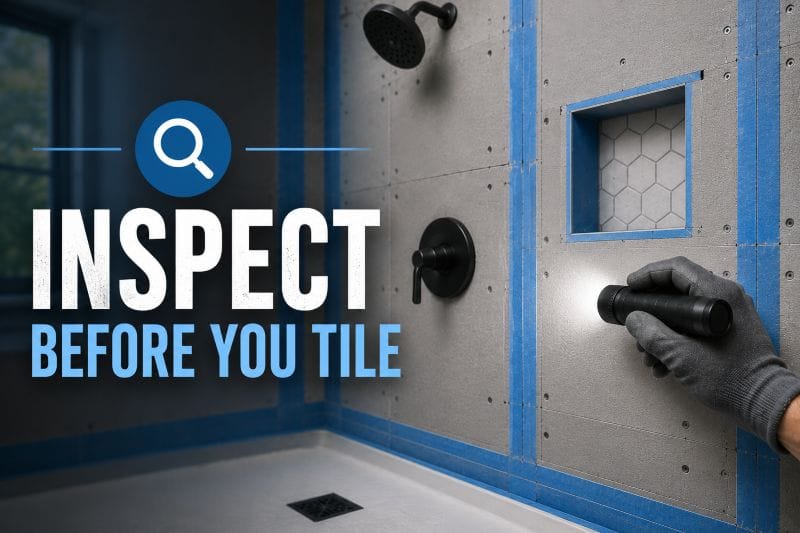
Contractors can also use records to train crews. When installers see the same photo sequence and checklist on repeated jobs, the waterproof backer board standard becomes easier to follow. Use Checklists to Keep Crews Consistent is where that planning becomes visible. When the site team understands this point, the waterproof backer board becomes a planning tool as much as a material choice.
How Records Help Owners and Contractors
The best documentation is practical rather than excessive. A few clear photos, a note on materials used, and a signed inspection point can answer most future questions. The goal is clarity, not paperwork for its own sake. How Records Help Owners and Contractors is where that planning becomes visible. That is why the conversation should stay close to the room, the water path, and the tile finish rather than drifting into vague product language.
Contractors can also use records to train crews. When installers see the same photo sequence and checklist on repeated jobs, the waterproof backer board standard becomes easier to follow. How Records Help Owners and Contractors is where that planning becomes visible. When the site team understands this point, the waterproof backer board becomes a planning tool as much as a material choice.
Professional installation is easier to defend when the hidden work is documented. Once tile covers the wall, waterproof backer board layout, seams, fasteners, and penetrations are no longer visible. A simple record protects both the contractor and the owner. How Records Help Owners and Contractors is where that planning becomes visible. For contractors improving installation records, this matters because the decision is made once but affects every later trade that touches the room.
So verwandeln Sie die Beratung in einen Kaufbrief
In einem nützlichen Kaufauftrag sollten der Zimmertyp, die Oberfläche, der Belichtungsgrad, die Erwartung der Brettdicke, der Zubehörbedarf und der Inspektionspunkt genannt werden. Wenn diese Details fehlen, kann die wasserdichte Trägerplatte immer noch ein gutes Produkt sein, aber das Website-Team muss sie füllen zu viele Lücken während der Installation.
Der Käufer braucht kein langes technisches Handbuch zu schreiben Ein kurzer Hinweis, der beschreibt, wo die wasserdichte Trägerplatine eingesetzt wird, wie sie auf angrenzende Oberflächen trifft, und welche Bereiche besondere Aufmerksamkeit erfordern, kann viele vermeidbare Fragen verhindern.
Häufige Fehler, die Sie vermeiden sollten
- Die Auswahl des wasserdichten Trägerboards nach dem Fliesenlayout ist bereits festgelegt.
- Alle nassen und trockenen Wände so behandeln, als ob sie die gleiche Exposition hätten.
- Ignorieren von Durchdringungen, Nischen, Bänken oder Halterungen bis zum Installationstag.
- Das Überspringen von Fotos und die Inspektion vor der Fliese verbergen die Wandvorbereitung.
Der teuerste Fehler ist normalerweise nicht das Brett selbst. Es ist die Kettenreaktion, die entsteht, wenn das wasserdichte Trägerbrett ohne ausreichende Informationen über die Wand, die Fliese und die Art und Weise, wie sich Wasser durch den Raum bewegt, ausgewählt wird.
Hilfreiche externe Referenzen
Für einen breiteren Hintergrund zur Terminologie von Keramikfliesen können Leser die Übersicht über Keramikfliesen unter https://en.wikipedia.org/wiki/Ceramic_tile einsehen. Für allgemeine Informationen zu Gebäudeinfeuchtigkeitskonzepten ist der Whole Building Design Guide eine nützliche Bildungsquelle unter https://www.wbdg.org/resources/moisture-management. Diese Referenzen unterstützen das allgemeine Verständnis und sollten zusammen mit den Produktanleitungen und lokalen Codeanforderungen für das spezifische Projekt gelesen werden.
Schlussfolgerung
Das Produktgespräch sollte die Personen einbeziehen, die als nächstes die Wand berühren Flieseninstallateure, Klempner, Glasinstallateure, und Vorgesetzte sehen alle unterschiedliche Risiken Wenn sie sich vor Beginn der Arbeiten auf die wasserdichte Trägerplatinenaufteilung einigen, ist der fertige Raum leichter zu koordinieren.
Für kommerzielle Teams ist die Wiederholbarkeit wichtig. Wenn die Spezifikation leicht zu verstehen ist und die Details überprüft werden können, kann eine wasserdichte Trägerplatte einen vorhersehbareren Prozess über mehrere Räume, Etagen oder Phasen hinweg unterstützen.
Gute Arbeit im Nassbereich ist normalerweise ruhig. Es hängt nicht von dramatischen Behauptungen oder komplizierter Sprache ab. Es hängt von einem klaren Untergrund, einer sorgfältigen Anordnung, sinnvollen Übergängen und Installateuren ab, die verstehen, warum in diesem Raum die wasserdichte Trägerplatte verwendet wird.