
Custom Size Backer Board: How to Confirm Dimensions Before Production
A custom size backer board can solve real problems on a construction project. It can reduce unnecessary cutting, align more closely with repeated wall layouts, simplify prefabricated bathroom production, or make private-label packaging more efficient.
But custom dimensions also create a new risk: once production starts, a small misunderstanding in length, width, thickness, edge treatment, or packaging can be repeated across an entire order.
For that reason, custom sizing should not begin with a message such as “Can you make a larger board?” It should begin with the wall, the installation method, and the dimensions that the project actually needs.
This guide explains how contractors, distributors, and project buyers can confirm custom waterproof backer board dimensions before production and avoid problems that are difficult to correct after the boards reach site.
Table of Contents
Why Order a Custom Size Backer Board?
Standard board dimensions work well for many projects, but they are not always the most efficient option.
Consider a hotel project with hundreds of nearly identical bathrooms. If every wall requires the same 150 mm strip to be removed from a standard board, the project creates the same cutting operation hundreds of times. That means more labour, more waste, more dust, and more offcuts to handle.
A custom size backer board may remove some of that repetitive work.
The same logic can apply to prefabricated bathroom modules, apartment developments, commercial washrooms, renovation systems, and private-label distribution.
Custom dimensions can also help a distributor build a product range around the sizes its customers actually request rather than stocking boards that consistently need to be altered on site.
The important point is that customization should solve a defined problem. Changing board dimensions simply because the factory can make them does not automatically improve the project.
Shengtu currently offers waterproof backer board and related construction products with customization support for project requirements. The broader product range can be reviewed through the company’s product catalogue. Shengtu waterproof backer board and construction products
Start With the Installed Wall, Not the Factory Sheet Size
The most useful custom dimensions come from the finished wall layout.
Before requesting production, look at how the board will actually be installed.
A wall may include a shower valve, niche, door opening, pipe box, bathtub edge, service panel, or internal corner. These details determine where joints naturally fall and where full boards provide the most benefit.
A project team that starts from the wall drawing can often identify a more practical panel layout than one that starts from a supplier’s standard catalogue.
For example, a slightly narrower board may fit repeated bathroom wall modules with fewer cuts. In another project, a longer board may reduce horizontal joints but become harder to carry through stairwells or standard door openings.
Neither size is automatically better.
The useful size is the one that works from factory production through transport, handling, installation, and finishing.
Length and Width Need to Be Confirmed Separately
Length and width are obvious dimensions, but they are also surprisingly easy to misunderstand when specifications move between drawings, purchase orders, samples, and factory production sheets.
Do not rely on phrases such as:
“standard bathroom panel”
“full-height board”
“large-size backer board”
“same as last order”
Those descriptions leave room for interpretation.
A custom order should state exact nominal dimensions and the agreed unit of measurement.
For example, the buyer and supplier should both be looking at the same written format:
Length × Width × Thickness
This sounds simple, but consistency matters when teams in different countries may use different drawing conventions.
If dimensions come from architectural drawings, confirm whether they describe the finished room, structural opening, framing grid, or actual panel.
Those are not always the same measurement.
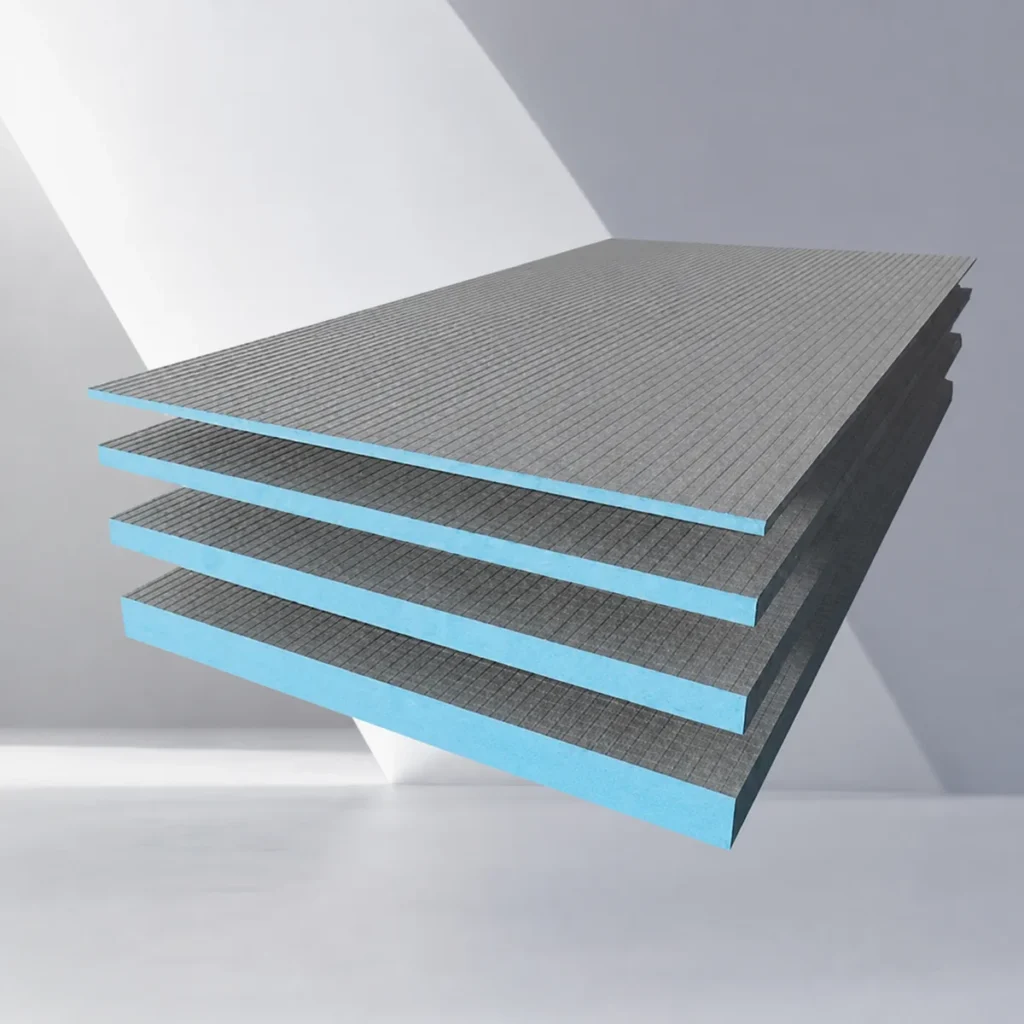
Backer Board Thickness Should Not Be Chosen From Size Alone
A wider or longer board does not automatically need a particular thickness, and a thinner board should not be selected simply to reduce weight.
Thickness is part of the complete wall design.
It can affect how the board works with the supporting structure, adjoining materials, tile finish, fixtures, wall build-up, and transitions into other surfaces.
For waterproof backer board projects, thickness should therefore be confirmed against the intended application rather than copied from another order.
This becomes particularly important when a supplier manufactures more than one type of XPS-based panel.
Shengtu’s current waterproof composite board page, for example, describes several thicknesses for different construction uses. Those application examples belong to that specific product range and should not automatically be transferred to another custom configuration. Shengtu Waterproof Composite Board specifications and applications
If the project engineer, installer, or buyer has selected a required thickness, place it in the production specification and sample approval rather than leaving it as a verbal instruction.
How Should Custom Board Sizes Be Confirmed Before Production?
A good confirmation process has one goal: the factory, buyer, and installation team should all understand the same product.
Before mass production, the following information should match across the purchase order, drawing, sample, and production document.
| Item | What Must Be Confirmed |
|---|---|
| Board length | Exact nominal length and unit |
| Board width | Exact nominal width and unit |
| Board thickness | Exact required thickness |
| Product structure | Correct XPS composite board configuration |
| Surface | Approved facing and reinforcement |
| Edge condition | Required edge format if relevant |
| Application | Wall, partition, shower, bathroom or other use |
| Quantity | Exact production quantity |
| Packaging | Boards per pack, protection and pallet format |
| Label | Product code and dimension information |
| Approved sample | Reference sample or signed specification version |
If one of these documents contains a different number, stop and reconcile the difference before production begins.
That is much easier than determining after shipment which document the factory followed.
Why the Backer Board Sample Approval Should Include Dimensions
A backer board sample approval should do more than confirm that the product “looks good.”
The sample is the physical bridge between the specification and bulk production.
Check its length, width, thickness, surface, edges, flatness, and overall construction against the document that will control mass production.
If a sample is cut down for courier shipping, clearly record that it is only a material sample and not a dimensional approval sample.
This distinction is easy to overlook.
A small sample may be perfectly adequate for checking the XPS core and reinforced face, but it tells the buyer nothing about whether a full custom panel can be manufactured, packed, transported, and handled as intended.
For a genuinely custom board size, approving at least one full-size production sample can be valuable when practical.
The decision depends on order size and project risk, but the principle is simple: approve the feature that matters before multiplying it across the order.
Custom Dimensions Must Work With the Supporting Frame
A board cannot be sized independently from the supporting wall.
If a panel is installed on framed construction, the edges and joints need suitable support. Changing board width can change where those joints fall relative to the framing.
That is why custom board sizing and framing layout should be reviewed together.
This is particularly relevant when the project uses a repeated wall system. A dimension that aligns well with the framing grid can reduce cutting and make installation more predictable.
Shengtu also supplies quick-install steel keel components, which makes it possible to review the backer board and supporting structure as related parts of the same construction discussion rather than treating them as unrelated purchases. Quick-install keel systems from Shengtu
This does not mean that one standard framing arrangement suits every board thickness or size. Framing requirements still need to follow the specific project and technical documentation.
Large Boards Can Reduce Joints but Create Handling Problems
There is an obvious attraction to larger panels: fewer boards can mean fewer joints.
But a drawing does not have to carry a panel through a building.
Before approving a large custom size backer board, consider what happens after the pallet arrives.
Can two workers handle it safely?
Will it pass through the site entrance?
Can it turn in a narrow corridor?
Will it fit inside an elevator?
Can it be stored flat and protected?
Will the pallet fit the planned transport and warehouse system?
These questions often matter more than saving one additional joint.
The best custom size is rarely the largest board a production line can manufacture. It is the size that improves installation without creating unnecessary handling and logistics problems.
Custom Board Size Can Change Packaging Requirements
Packaging should be reviewed at the same time as board dimensions.
A small change in panel length may change pallet footprint, stacking arrangement, container loading, or the amount of edge protection required.
That is why the backer board packaging specification should not be finalized before the custom size is approved.
For export orders, packaging has to protect the product through several stages: factory handling, loading, sea or land transportation, warehouse storage, unloading, and site delivery.
Corners and reinforced surfaces deserve particular attention because damage can occur long before the panel reaches the installer.
Private-label buyers also need enough room for the correct product identification, dimensions, batch information, and handling instructions.
If board dimensions change but the old packaging artwork remains, the shipment can arrive with incorrect product information even when the panel itself is correct.
Use One Drawing Version for Production
Version control becomes important as soon as a product is customized.
A buyer may start with one size, revise it after reviewing a bathroom drawing, and then make a second adjustment following a sample.
At that point, there may be three different dimensions sitting in email threads, chat messages, drawings, and quotation documents.
Production should not start until one version is clearly identified as final.
A practical drawing name might include the project code, product code, and revision number.
When a revision is issued, the old version should no longer be used for production.
This principle is closely related to formal quality management. The current ISO 9001:2026 framework emphasizes controlled processes, documented information, performance evaluation, and consistent delivery of requirements.
For a custom backer board order, that translates into something very practical: everyone needs to manufacture and inspect against the same current specification.
ISO 9001 quality management information
What Should Be Included in a Backer Board Submittal Checklist?
A backer board submittal checklist is useful when the product needs approval by a contractor, consultant, architect, distributor, or project owner before ordering.
The submittal should make it easy to answer a basic question:
“Is this the board we intend to install?”
For a custom size order, the documentation should clearly identify the panel dimensions, thickness, construction, intended application, sample reference, and relevant technical data.
If a test report or certification is required, verify that it actually relates to the product being submitted.
Do not attach unrelated documents simply to make the submittal package look more complete.
This is especially important when custom dimensions or configurations differ from a standard product.
For projects entering the European market, documentation obligations may also depend on the construction product and the applicable harmonised technical framework. The European Commission’s Construction Products Regulation information explains how harmonised rules, declarations, and conformity requirements apply to construction products placed on the EU market.
European Commission Construction Products Regulation guidance
How Custom Sizes Affect Waterproofing Details
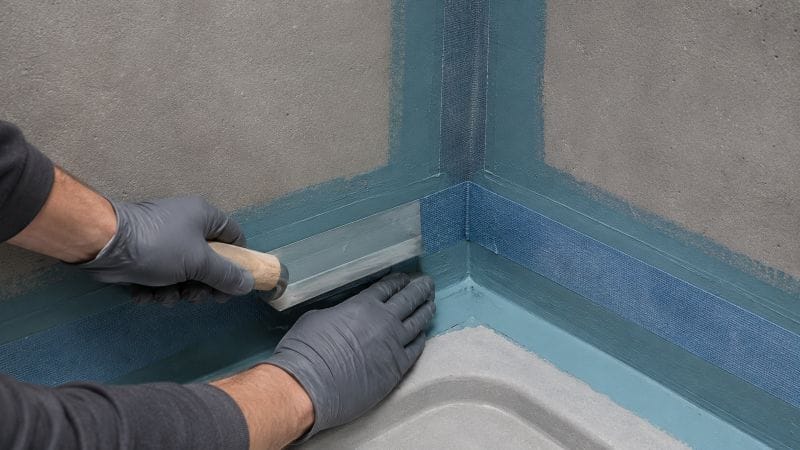
Changing panel dimensions does not change the basic principle of wet-area construction: the finished waterproofing system depends on more than the board face.
Larger boards may reduce the number of seams, but they do not eliminate corners, penetrations, fasteners, wall-to-floor transitions, or connections with shower components.
Those details still need compatible treatment.
Shengtu’s waterproofing accessory range includes products intended for joints, corners, and related wet-area construction. Waterproofing auxiliary materials from Shengtu
When planning custom board dimensions for shower walls, it can also be useful to compare the panel layout with valve positions, niches, and wet-zone transitions before finalizing production.
The site’s shower-wall guide provides more detail on how waterproof backer board interacts with those installation conditions. How to choose waterproof backer board for shower walls
What Should Be Checked When the First Bulk Order Arrives?
The first delivery is where the custom specification becomes real.
Do not wait until installation begins to discover whether production matches the approved size.
Open representative packs and compare the boards with the approved documentation.
Measure actual length, width, and thickness using the agreed inspection method. Check surface condition, edges, packaging, and product labels at the same time.
If the order contains multiple sizes, make sure they are clearly identified.
This matters more than it sounds.
Two custom panels with similar dimensions can easily be mixed in a warehouse if their labels are unclear. Once unpacked on site, the installer may only notice the difference after the wrong board has already been cut.
A simple product code linked to size can prevent a surprisingly expensive mistake.
Do Not Treat Nominal Size and Acceptance Tolerance as the Same Thing
A specification that says a board should be 1200 mm wide still needs an agreed method for deciding whether production is acceptable.
Manufacturing involves tolerances.
The appropriate tolerance should come from the applicable product specification, technical agreement, project requirement, or manufacturer documentation for the exact board.
It should not be invented after inspection.
This is another reason to settle dimensional acceptance criteria before production.
Without an agreed tolerance, the supplier may consider a board acceptable while the buyer considers the same board out of specification.
The problem is not necessarily manufacturing quality. It may simply be that no one defined what “acceptable” meant.
Custom Size Backer Board Is Most Useful in Repeated Projects
Customization delivers the greatest practical value when the same layout appears many times.
A single bathroom renovation may not justify changing factory dimensions.
A 200-room hotel is different.
So is a modular bathroom manufacturer producing the same wall set every week.
In those projects, reducing one cut or one unnecessary board joint can be repeated dozens or hundreds of times.
That is where custom dimensions can influence labour planning, waste, material handling, and installation consistency.
For distributors, the same principle applies at market level. If customers repeatedly request the same non-standard size, converting that repeated request into a defined private-label product may make more sense than treating every order as a special case.
A Practical Pre-Production Check
Before releasing a custom waterproof backer board order, someone on the purchasing side should be able to answer these questions without searching through old messages:
What is the final length?
What is the final width?
What is the final thickness?
Which drawing revision controls production?
Which sample was approved?
What surface construction is required?
How will the board be packaged?
How will the size be identified on the pack?
What dimensional acceptance criteria apply?
Does the factory have the same information?
If any answer is uncertain, production confirmation is not finished.
Conclusion
A custom size backer board can make a waterproof wall system easier to install, especially in hotels, apartment projects, modular bathrooms, repeated commercial interiors, and private-label product ranges.
The benefit comes from reducing unnecessary site work, not simply from ordering a different size.
The most reliable process starts with the real wall layout, then confirms length, width, thickness, framing compatibility, handling, packaging, sample approval, and dimensional acceptance before mass production.
For custom waterproof backer board projects, Shengtu can review panel requirements alongside its wider waterproof board, framing, and accessory range. The more specific the drawing and installation information supplied at the beginning, the easier it is to turn a custom dimension into a repeatable production specification rather than a one-off factory instruction.
Frequently Asked Questions
How should custom board sizes be confirmed before production?
Confirm the exact length, width, thickness, product structure, surface, packaging, and drawing revision in writing. The purchase order, approved sample, production drawing, and inspection requirements should all refer to the same final specification.
Is a larger backer board always better?
No. Larger boards can reduce the number of joints, but they may create transport, storage, site-access, and handling problems. The most useful board size balances joint reduction with practical installation and logistics.
Should a custom size backer board have a full-size sample?
For higher-risk or large-volume orders, a full-size sample can be useful because a small material sample cannot confirm full-panel dimensions, flatness, packaging, or handling. The appropriate sample process depends on the project.
Can custom board dimensions change the framing layout?
Yes. Changing board width or length can move panel joints relative to the supporting frame. Custom board sizing should therefore be reviewed together with the framing layout rather than as an isolated purchasing decision.
What should be checked when a custom backer board order arrives?
Check representative boards against the approved specification, including length, width, thickness, surface, edge condition, packaging, labels, and product identification. Any agreed dimensional tolerances should already be defined before this inspection.